[ad_1]
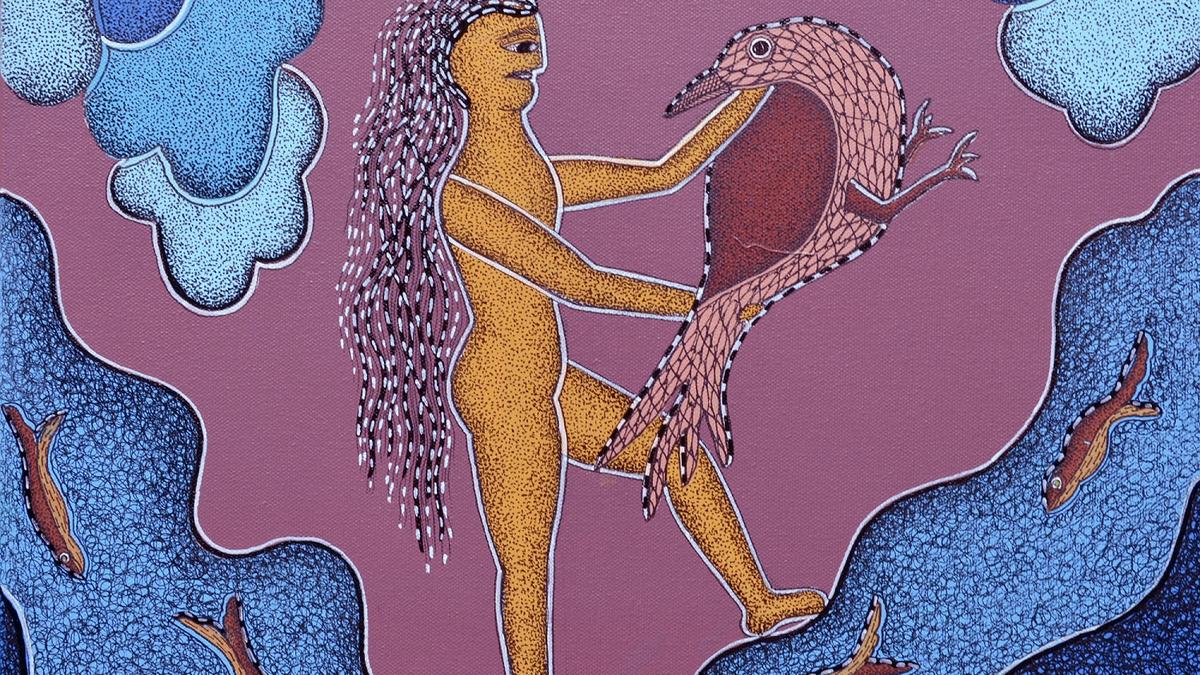
Mayank Shyam’s artwork at Harvest 2024 with Blue Horizons as the theme
| Photo Credit: SPECIAL ARRANGEMENT
The history of the colour blue reflects cultural significance across civilisations. As compared to red or yellow, blue was not common in ancient Greece and Rome mostly due to the scarcity of blue dye. In Europe, blue came into prominence sometime in the Middle Ages (500 to 1400–1500 CE).
Indigo, a plant native to the east, was sought after to obtain blue and, therefore, the region became an exporter of indigo dye. Egyptians associated blue with the sky and the River Nile and that is how blue assumed importance in their culture. Around 2500 BCE, Egyptians created Egyptian blue, which is now known as the oldest artificially produced pigment.
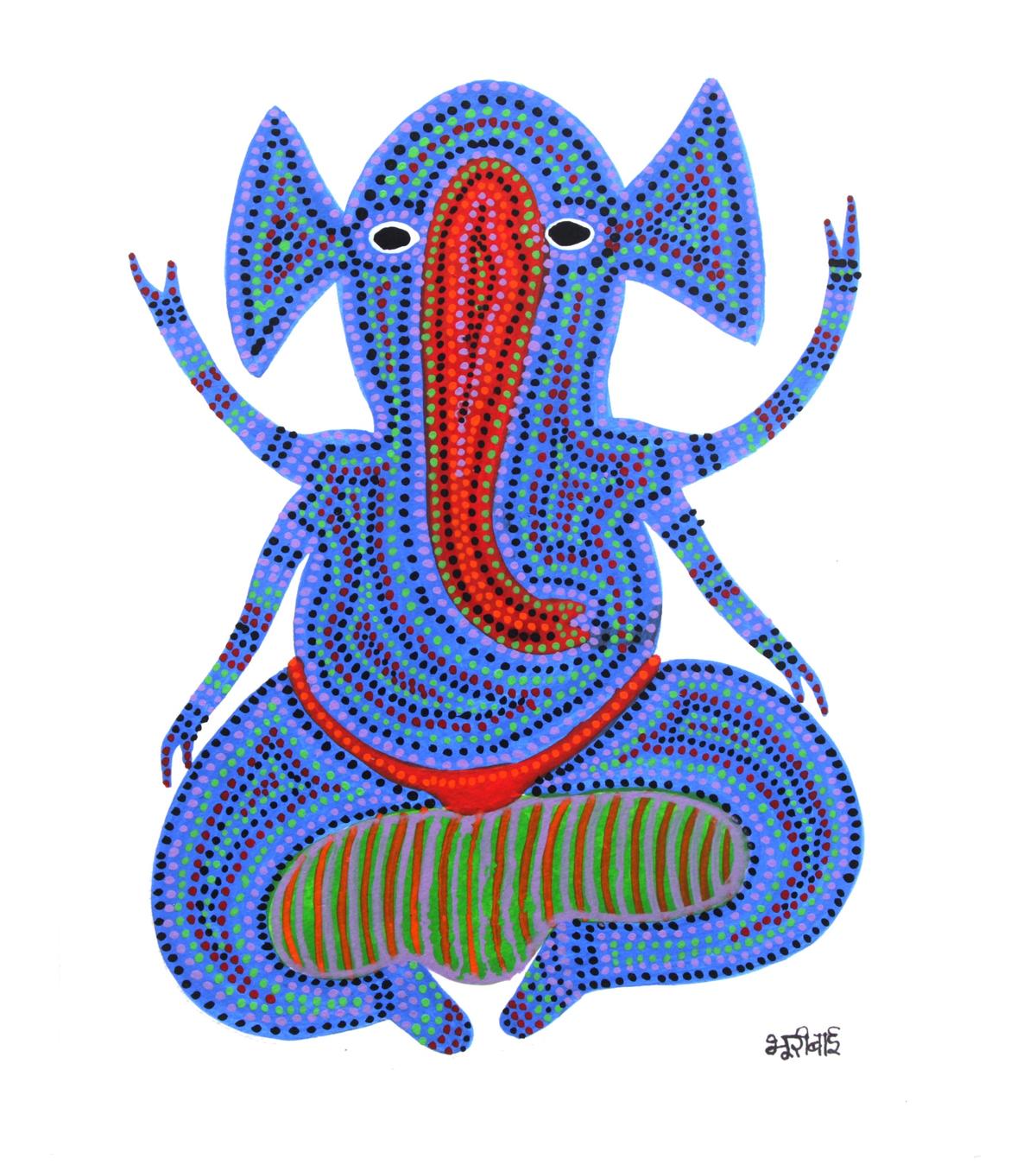
Bhuri Bai’s artwork at Harvest 2024 with Blue Horizons as the theme
| Photo Credit:
SPECIAL ARRANGEMENT
Blue cast a spell on Giotto, Claude Monet, Pierre-Auguste Renoir, and Vincent Van Gogh. The Blue Period in Picasso’s career or Henri Matisse’s experiments highlight the trajectory of the colour in art history.
With Blue Horizons as the theme for this year’s Harvest 2024, an annual show by Arushi Arts Gallery, artists including KG Subramanyan, Satish Gupta, Prabhakar Kolte, Shobha Broota, and others set out to explore many layers of the colour. They bring out melancholy, hope, faith, peace, and vastness as they probe the colour.
Arushi Arts owner, Payal Kapoor, says, “The colour blue has been integral to our ancient civilization and used by international and Indian artists. I found it to be a captivating theme for our exhibition. The name Blue Horizons adds a unique perspective, offering a poetic expression on life, the world, art, and the myriad hopes and desires of the human spirit.” The Harvest show was started by late art critic Suneet Chopra in 2001.

Venkat Bothsa artwork at Harvest 2024 with Blue Horizons as the theme
| Photo Credit:
SPECIAL ARRANGEMENT
Artist Diya Mehta shows the interiors of a railway compartment bathed in blue. A sleeping passenger, a bag hanging — it is melancholic and enigmatic at once. “Through a monochromatic palette dominated by shades of blue, I explore the dichotomy between chaos and calm. The blue light, symbolic of serenity yet tinged with melancholy, bathes the figures as they navigate the exhaustion of their daily grind. The sleeping passengers, contorted in their makeshift sanctuaries, embody the tension between survival and respite—a testament to the human spirit adapting to the demands of modern life,” says Mehta.
Ahalya Rajendran’s An Evening At Kamati Baug using watercolour, acrylic and charcoal, on wasli paper shows glimpses of daily life — an evening scene in a park against a vast blue sky with people walking, sitting and chatting. The juxtaposition of the lush green garden and vast blue sky is arresting. In another one Rajendran shows people bursting crackers on their terraces on Deepavali night and once again the dark blue sky gets highlighted in the work.
“In these times, when the news is all about the stress of modern world, the colour blue needs to fill the human mind with its coolness. Human relations, social commitments, and new world views have been skilfully woven into the works of artists, perfectly balanced with the precision of aesthetic sense,” says Santhosh Sadrak, the curator of the show.

Sachindra Nath Jha artwork at Harvest 2024 with Blue Horizons as the theme
| Photo Credit:
SPECIAL ARRANGEMENT
Artist Sachindra Nath Jha has made Nandi the bull, the vehicle of Lord Shiva. The colourful sculpture boasts a vibrant imagery of flowers and birds. “In all festivities colours, flowers, kumkum, chandan are used. All of these flowers have their own mesmerising glow. Nandi is the perfect image of purity and development. Flowers bringoptimism and joviality. My work has sharp colours representing a combination of truth and fiction,” says Jha.
At Arushi Arts Gallery, W-23, GK-II; Till February 10; 11am to 6pm
Published – January 24, 2025 01:41 am IST
[ad_2]
The Hindu