[ad_1]
In the heart of our bustling city, the Tabebuia rosea, commonly known as the pink poui or pink trumpet tree, stands as a vibrant symbol of Nature’s resilience.
Originally native to Central America, this striking tree has adapted remarkably well to urban environments, proving to be a valuable asset in the city’s green arsenal, with its ability to thrive amidst pollution and limited space.
A deciduous tree, the Tabebuia rosea sheds its leaves before spectacularly blooming, creating a dramatic transformation from a bare silhouette to a floral spectacle. The soft, pastel pink flowers beautifully contrast with its deep green foliage, and during flowering season — peaking in late spring and early summer — the ground beneath becomes a picturesque carpet of fallen petals.
Sadly, the fleeting blooms last only a few weeks, and serve as a poignant reminder of Nature’s ephemeral beauty.
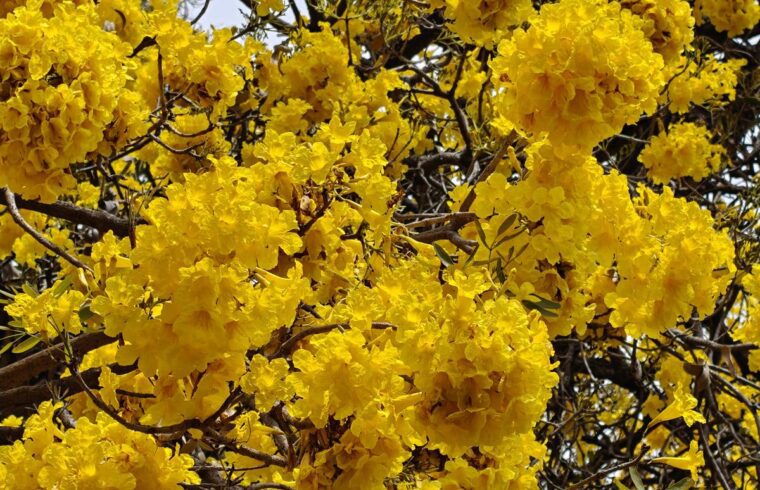
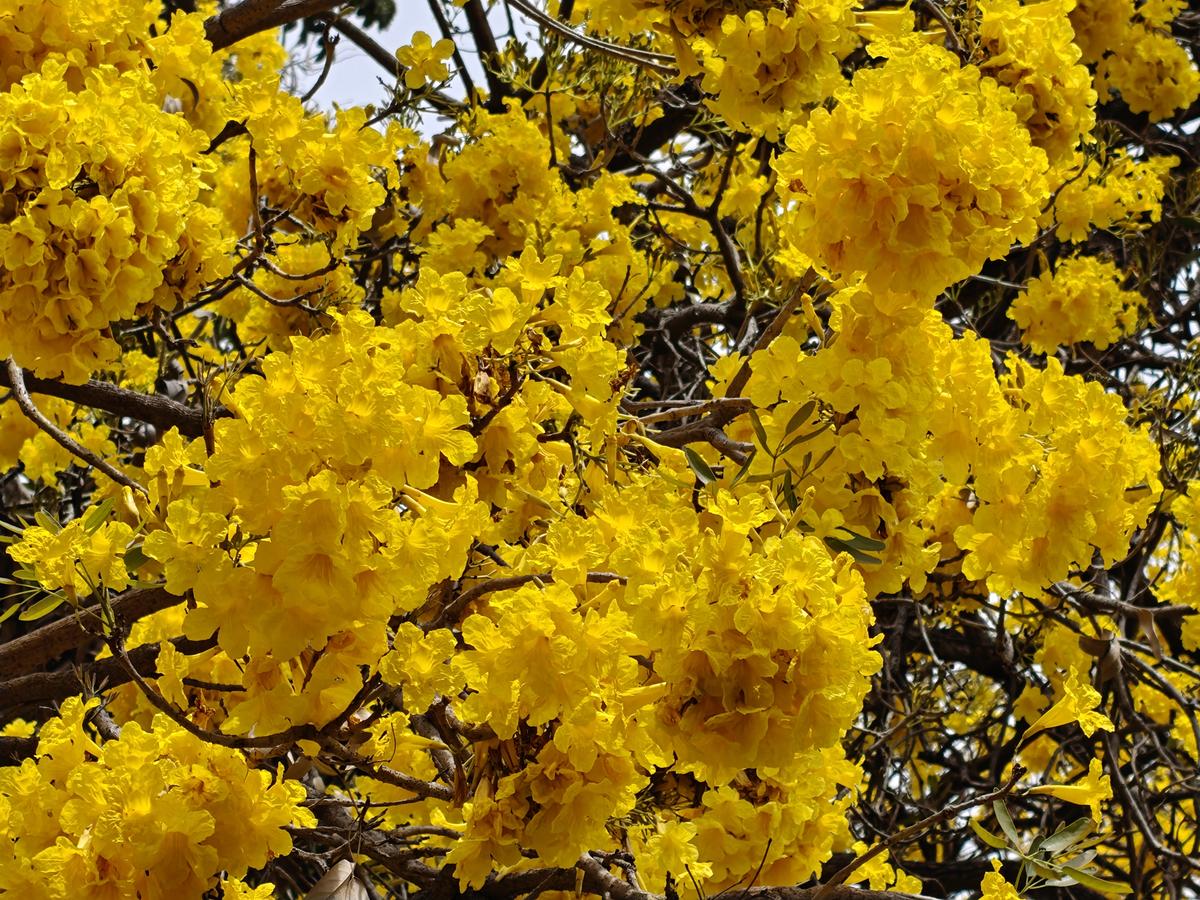
“People have started introducing plants from across the world,” says M Jagadeesh, Joint Director of Horticulture at Lalbagh. “While the Tabebuia rosea is native to Africa, it has been introduced to India, with other varieties, such as the Tabebuia argentea which bears yellow flowers, and the Tabebuia pallida which features light pink blooms. There are more than seven or eight different types of Tabebuia, and planting these in urban areas has become a source of fascination for people,” he says, adding that it boosts the supply of oxygen in the area.
Yellow Tabebuia flowers around Vidhana Soudha gardens
| Photo Credit:
MURALI KUMAR K / The Hindu #ShotonOnePlus
The Tabebuia genus comprises a range of small to medium-sized trees, each with distinct characteristics. The Tabebuia argentea, for instance, is relatively small, typically reaching heights of about 25-26 feet, with a width of 12-13 feet, while the Tabebuia spectabilis resembles a shrub, almost akin to a mini tree.
The Tabebuia rosea and Tabebuia pallida have been categorised as medium-sized plants, with the Tabebuia avellanedae. These trees are well-suited for urban environments and are often planted as avenue trees, making them a popular choice in cities worldwide.
However, it is important to note that these tropical trees struggle to survive in temperate climates where temperatures may plummet to zero or below, resulting in their limited presence in harsher regions.
Beyond its visual allure, the Tabebuia rosea plays a crucial role in the ecosystem. Its nectar-rich flowers attract a variety of pollinators, including bees and butterflies, which are essential for the pollination of numerous plant species. This interaction contributes significantly to the biodiversity of their habitats, supporting a healthy environment.

Yellow tabebuia flowers at Vidhana Soudha gardens
| Photo Credit:
MURALI KUMAR K / The Hindu #ShotonOnePlus
However, David Kumar, CEO, Vibhinna India Foundation, notes, “Tabebuia rosea does not harbor many insects, although some solitary bees are attracted to it.” These bees play a crucial role in pollination, helping sustain the plant’s reproductive cycle. The limited interaction with other insects underscores the tree’s subtle yet significant contribution to local ecosystems.
There are claims on the potential medicinal uses of Tabebuia rosea. “While it has been suggested that Tabebuia rosea may offer benefits for conditions such as anemia, constipation, and even cancer in places like the United States and tribal Brazil, its high toxicity raises significant safety concerns,” explains Dr KR Keshava Murthy, Honorary Chief Botanist at Lalbagh.
He adds that this toxicity complicates efforts to validate its medicinal effectiveness, particularly in traditional systems such as Ayurveda, Unani, and Siddha, where its use is not well-documented.
For those attuned to the subtle rhythms of city life, the arrival of the Tabebuia rosea’s bloom is a much-anticipated event. It offers a vibrant visual feast, a temporary escape from the monotonous expanse of concrete and asphalt. This is not a timid bloom; it’s a bold declaration, an explosion of trumpet-shaped flowers that transform ordinary streets into ethereal avenues.
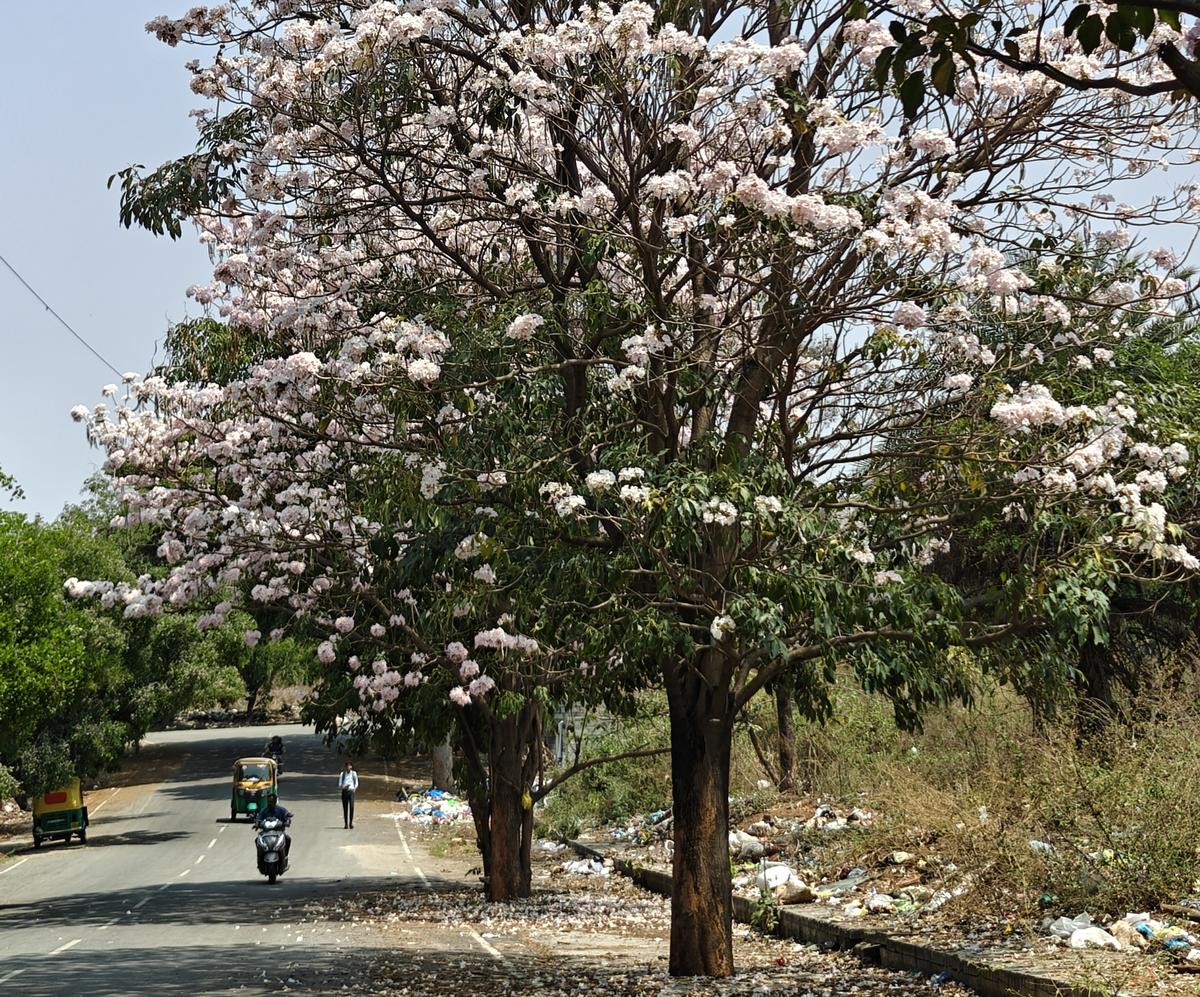
Tabebuia flowers bloom at Rajarajeshwari Nagar, in Bengaluru
| Photo Credit:
MURALI KUMAR K / The Hindu
Published – April 10, 2025 05:16 pm IST
[ad_2]
The Hindu