[ad_1]
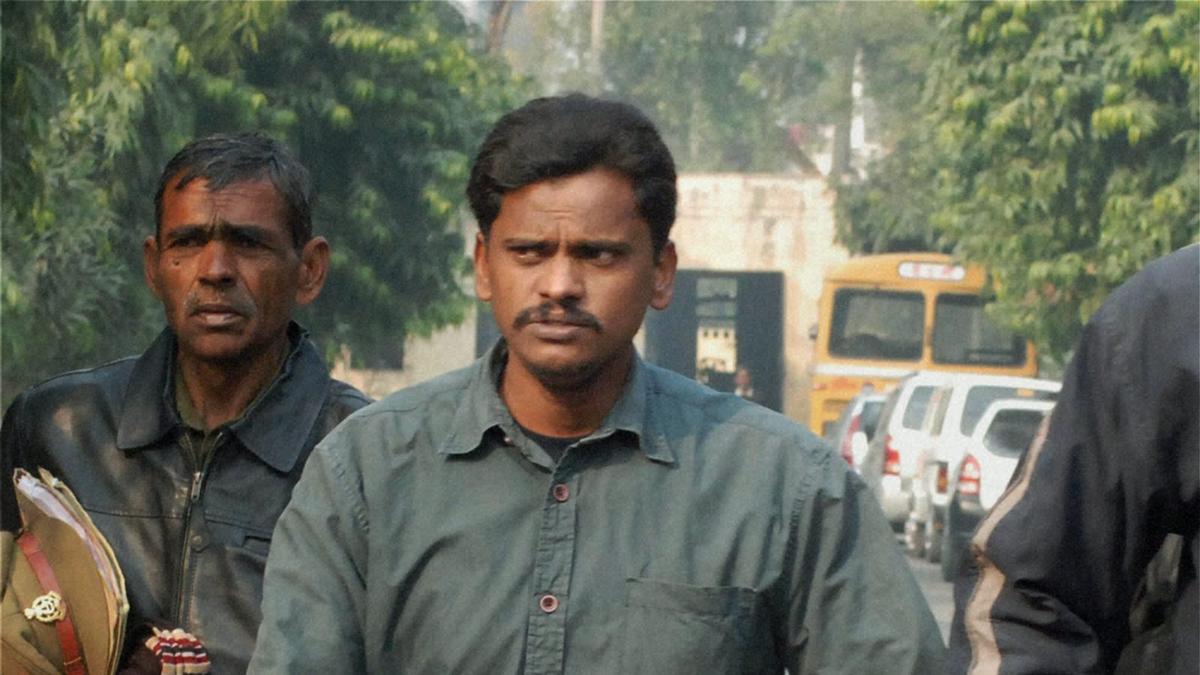
File photo of Surinder Kohli
| Photo Credit: PTI
The Supreme Court on Tuesday (October 7, 2025) indicated that Nithari killings convict Surendra Koli may soon be acquitted in the only case in which his conviction still stands. The court observed that it would amount to a “travesty of justice” to uphold the 2011 verdict when Mr. Koli had already been exonerated in 12 other cases arising from the same set of facts and evidence.
While reserving its verdict on Mr. Koli’s curative petition, a Bench of Chief Justice of India (CJI) B.R. Gavai and Justices Surya Kant and Vikram Nath said, “This matter deserves to be allowed in a minute.”
“An anomalous situation would arise if, on the same set of facts, he is convicted in this case when this court has acquitted him in the others,” the Bench told Additional Solicitor-General Raja Thakare, who appeared for the Central Bureau of Investigation (CBI).

The court noted that Mr. Koli’s conviction in the remaining case rested solely on his confessional statement and the recovery of a kitchen knife from a lane behind his house, the same pieces of evidence on which he was acquitted in the other trials.
When Mr. Thakare attempted to distinguish the pending case on factual grounds, the Bench reminded him of his responsibility to assist the court impartially. “As a solicitor, we expect you to be an officer of the court,” the CJI said.
A curative petition, which is typically heard in chambers, is the rarest form of judicial review. It is entertained only in exceptional circumstances such as a denial of natural justice, bias, or a fundamental miscarriage of process resulting in grave injustice. Mr. Koli’s plea, his last available legal recourse against the Supreme Court’s 2011 ruling that affirmed his conviction and death sentence, was listed for hearing in open court after the Bench agreed to consider it on September 1.

On July 30, the apex court had acquitted him in 12 of 13 cases linked to the Nithari killings, citing serious procedural lapses and unreliable evidence. The Bench had found that the prosecution failed to establish guilt beyond a reasonable doubt and noted multiple irregularities in the investigation.
Mr. Koli was sentenced to death after the Supreme Court upheld his conviction in February 2011. The Allahabad High Court, however, commuted the sentence to life imprisonment in 2015, noting the prolonged delay in deciding his mercy petition. His review petition had earlier been dismissed by the apex court after an open court hearing on October 28, 2014.
The Nithari killings, which came to light in 2007, stunned the nation with their sheer depravity. The discovery of skeletal remains of several children in a drain behind a Noida house where Mr. Koli worked as a domestic aide exposed a series of murders that shocked the public conscience. The house belonged to businessman Moninder Singh Pandher, who was also named as an accused in multiple charge sheets.
Following widespread public outrage, the probe was transferred to the CBI, which alleged that Mr. Koli lured young girls to the house, sexually assaulted and killed them, and mutilated their bodies. He was also accused of cannibalism. Between 2005 and 2007, 16 cases of rape and murder were registered. The prosecution claimed to have recovered the weapon used to dismember the victims’ bodies. The trial court convicted Mr. Koli in 13 cases, while Mr. Pandher, initially convicted in two, was later acquitted in all. After the Supreme Court’s 2011 ruling, Mr. Koli was left with one surviving conviction.
While acquitting him in July, the Supreme Court had observed that the recoveries made during the investigation were not corroborated by any statement under Section 27 of the Indian Evidence Act, which deals with recoveries based on disclosures made by an accused in custody. The CBI had approached the court challenging an October 2023 order of the Allahabad High Court that acquitted Mr. Koli, which had faulted the agency for failing to probe a suspected organ trade angle that had surfaced during the investigation.
Published – October 07, 2025 01:30 pm IST
[ad_2]
IThe Hindu