[ad_1]
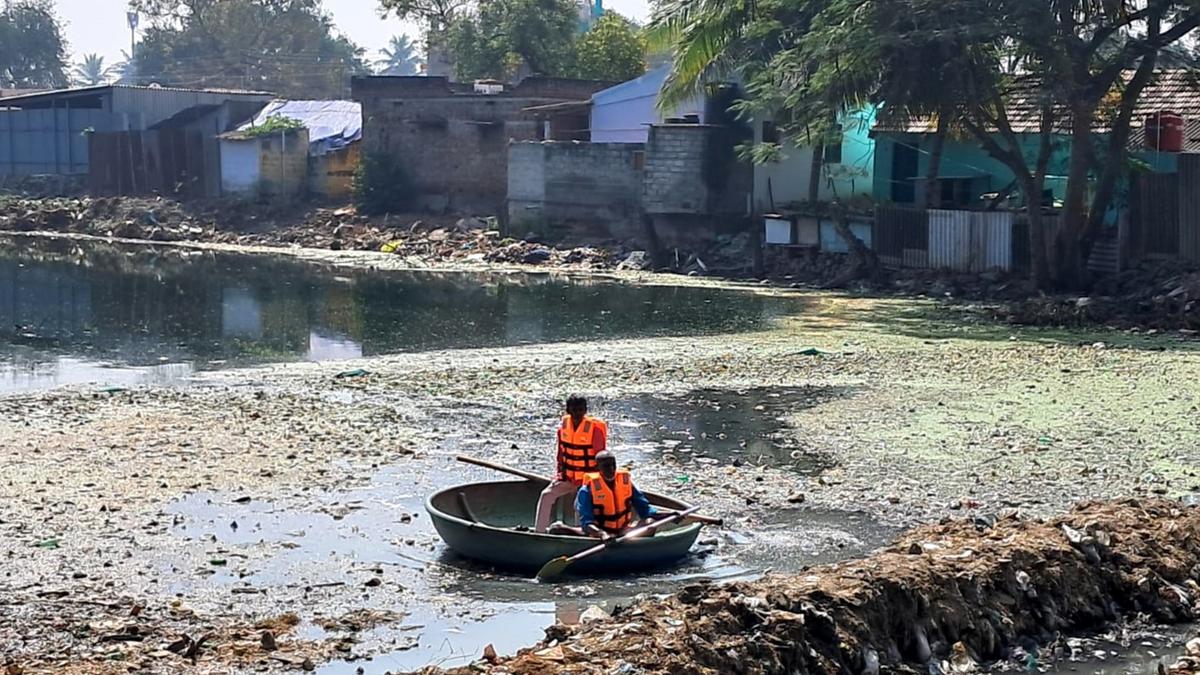
A nutrient-based solution is mixed into Urumandampalayam pond to improve water quality and break down organic matter.
| Photo Credit: SPL
Siruthuli, in association with the Coimbatore Corporation, launched a pilot project to restore the 1.61-acre Urumandampalayam pond in Coimbatore city using the phyco-remediation method.
The pond, with a water-holding capacity of 170 lakh litres, receives 0.79 million litres of untreated sewage daily from around 2,000 households.
“The wastewater from households enters water bodies through streams and supply channels, contaminating groundwater. The high fecal coliform levels make it unfit for irrigation or other uses. Treating sewage is essential to restore water quality,” said Vanitha Mohan, Managing Trustee of Siruthuli.
A project executive from Siruthuli explained that in this method a nutrient-based solution is used, which, when mixed with sewage water in the pond, promotes the growth of diatoms. The diatoms improve water quality by increasing dissolved oxygen levels, supporting aquatic life, and accelerating sludge decomposition. Their growth also helps prevent harmful algal blooms, such as blue-green algae, that degrade water quality. This process clears sludge and silt, making it easier to remove solid waste.
For the first four months, dosing will be carried out weekly.
Estimated at ₹20 lakh, the initiative is funded through CSR contributions, with Siruthuli overseeing rejuvenation and maintenance for one year. A similar approach will be implemented at the Vellakinaru South Solai pond in the city.
A senior Corporation official said, “A walkway will be created, and fencing will be taken up around the pond. Initially, Siruthuli planned to set up a decentralised sewage treatment plant. Since the Corporation is carrying out underground drainage works across the city to direct sewage to existing STPs, it was not required. Instead, this alternative approach was implemented.”
After completion, a third-party evaluation will be conducted, and a report will be submitted to the Corporation. If successful, the method will be replicated in other water bodies, the official said.
Published – February 12, 2025 07:54 pm IST
[ad_2]
The Hindu