[ad_1]
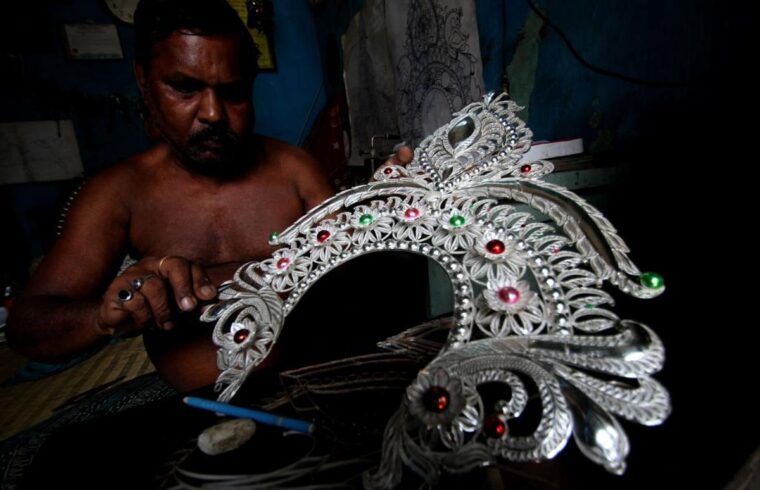
In the old town of Cuttack, Raghunath Patra begins his day at work by placing silver balls on a wooden table and pressing them into wires or tara. The molten wires are then carved into patterns to create beautiful silver filigree work known as Rupa Tarakasi — an art form that has been a part of Odisha’s cultural heritage for over five centuries.
As early as March, the city’s artisans begin preparations for the Durga Puja season in October-November, when grand chandi medhas (silver filigree tableaux) adorn puja pandals. Last year, Cuttack’s Rupa Tarakasi was granted a GI (Geographical Indication) tag, with the Odisha government pledging to make Odisha the ‘Tarakasi hub’ of India.
A year later, artisans say “none of the promises have materialised”. Workers remain underfunded, and they also face challenges with fake Tarakasi products from Kolkata and elsewhere flooding the market. “Customers are often unaware of the difference and lean towards products that are cheaper. The Tarakasi work from Kolkata lacks intricacy and does not float on water, unlike authentic Odisha craftsmanship,” says Patra. The price of Tarakasi from Cuttack ranges between ₹700 and ₹12,000 depending on the size and work involved in the design.
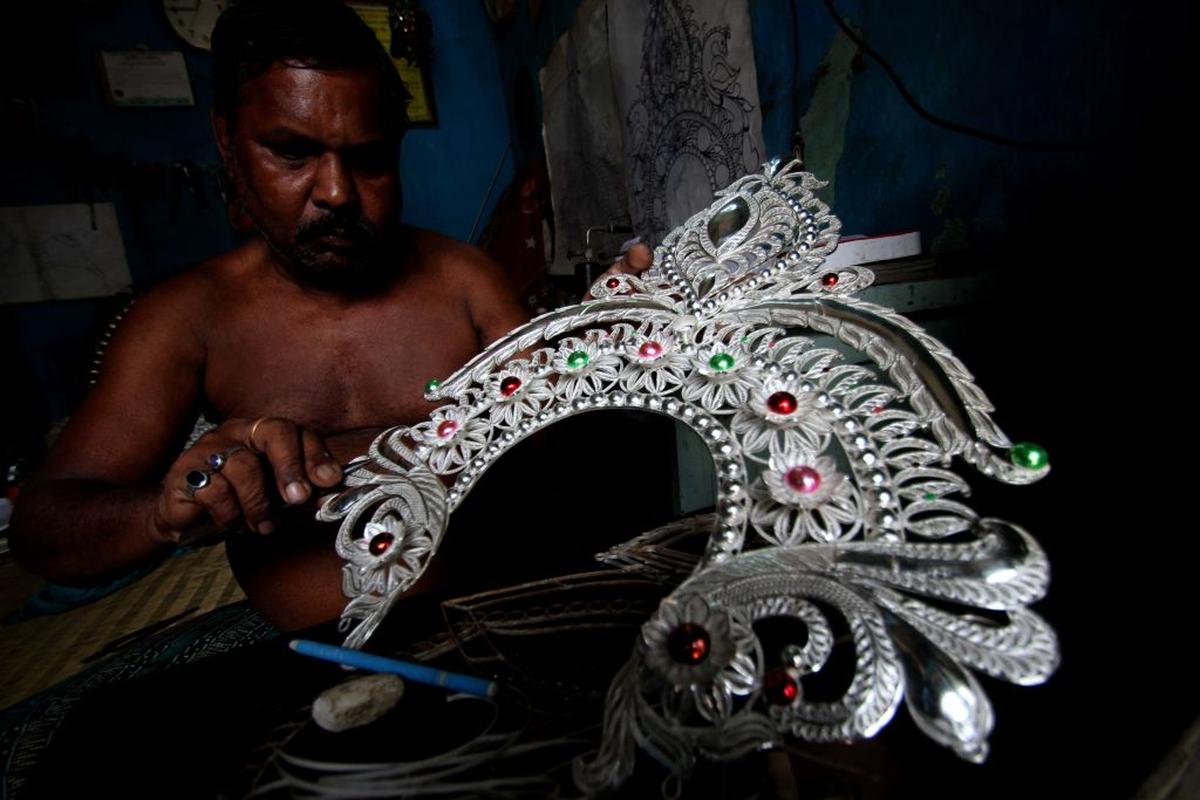
Traditional Rupa Tarakasi work involves making silver ornaments and crowns for the Durga idol in time for Durga Puja festivities in October-November in Cuttack.
| Photo Credit:
Getty Images
In one of the narrowest lanes of Cuttack’s Mohammadia Bazaar is Jayant Sahu’s shop. His family has been in the business for over 100 years. “My father had the licence to export Rupa Tarakasi artefacts to the U.S. and the U.K., but it was cancelled during the Emergency,” says Sahu. He is joined by his son, who holds an MBA degree but works to keep the Tarakasi art form alive.
Sahu’s workshop has four artisans who sit cross-legged on the floor as they work on the designs. The medha season brings a renewed sense of purpose for these artisans. “This is the only time of the year when we see stable income,” says Sahu. Ventilation in the room is minimal and the dim lighting makes it more difficult for artisans to work.
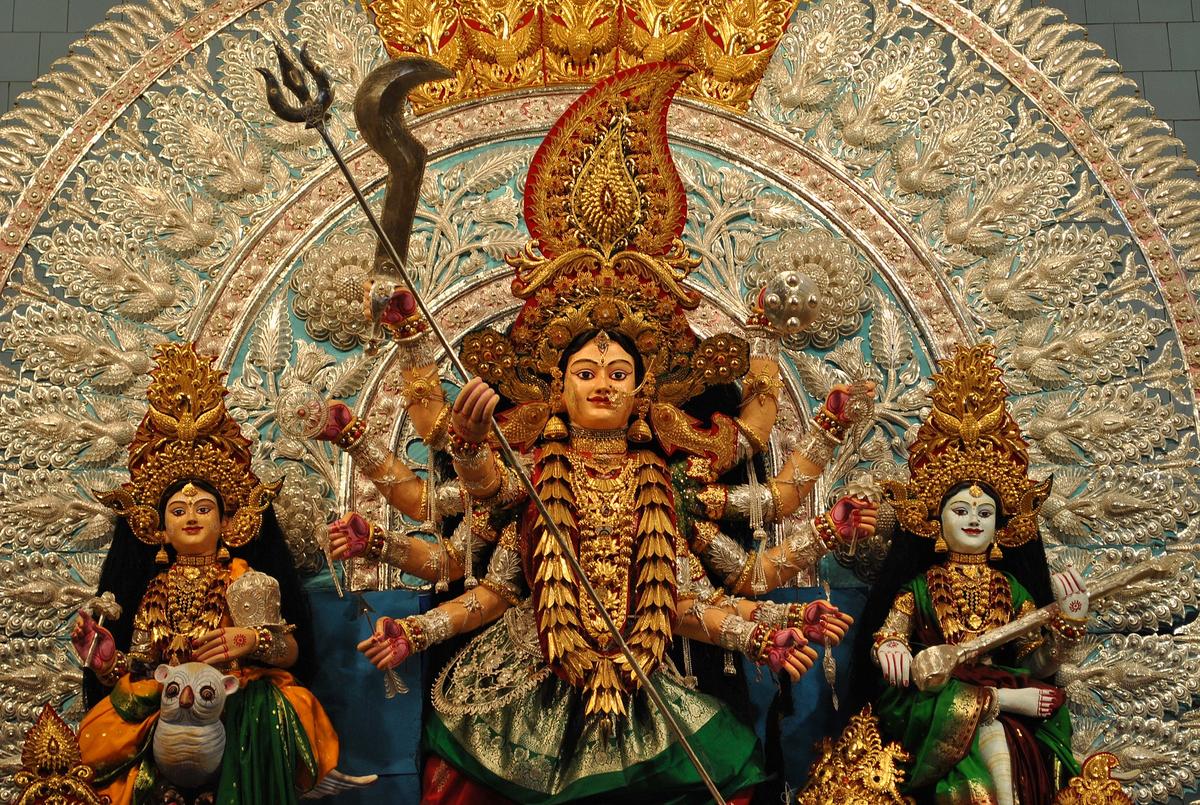
The traditional Rupa Tarakasi silver filigree work that adorns Durga Puja pandals in Cuttack, Odisha.
| Photo Credit:
Wiki Commons
In the 1970s and 80s, Sahu’s father Iswar had 25 artisans working under him but now the number is down to a single digit. For generations, this art form and its know-how have been passed down in the family but things are changing. “The children of artisans have shifted to cities to take up jobs in the IT sector,” says Patra.
Adapting to a younger audience
A certain type of Tarakasi involves women creating jewellery with the help of safety pins. This has become rare today and “traditional pieces like the Douma necklace have disappeared with time as the women stopped making them”, adds Sahu.
Jewellery shops sell different varieties of Tarakasi necklaces, earrings and bangles, but the art form goes beyond just these. There are traditional designs such as the Sindura Pharua(container used by married women to store sindoor or vermillion powder) and sindoor sticks,which are not sold much in the market due to a lack of demand.
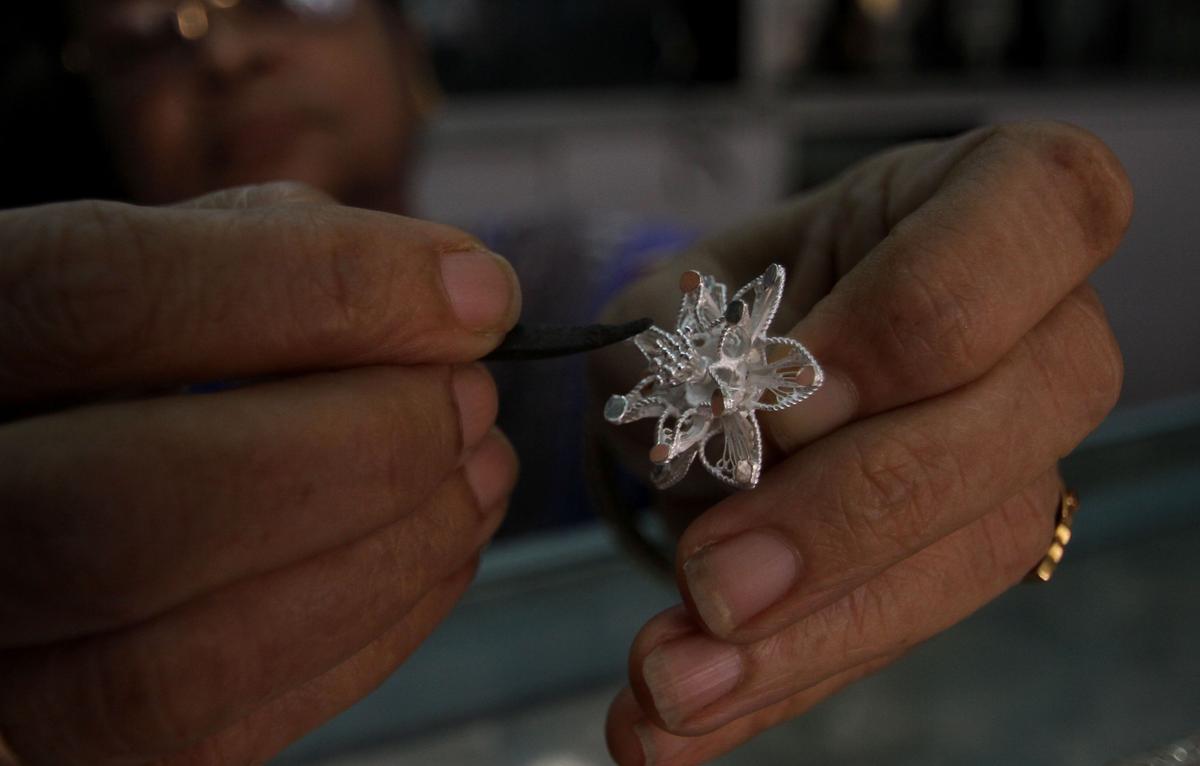
A Tarakasi artisan at work.
| Photo Credit:
Biswaranjan Rout
“There is no money in this art form. If we go to the jewellery shops and ask for better prices for our designs, they refuse outright,” says Sahu. Evolving market trends have prompted artisans like Sahu to introduce newer designs — in minimalistic patterns and geometric shapes instead of the elaborate animal or flower motifs — to cater to younger audiences. “I have come up with cocktail rings, hairpins and so on; we must adapt,” he explains.
Tarakasi is traditionally limited to silver but there is space for innovation, say artisans. Many of them believe that silver filigree can adapt to changing times if integrated with precious stones.
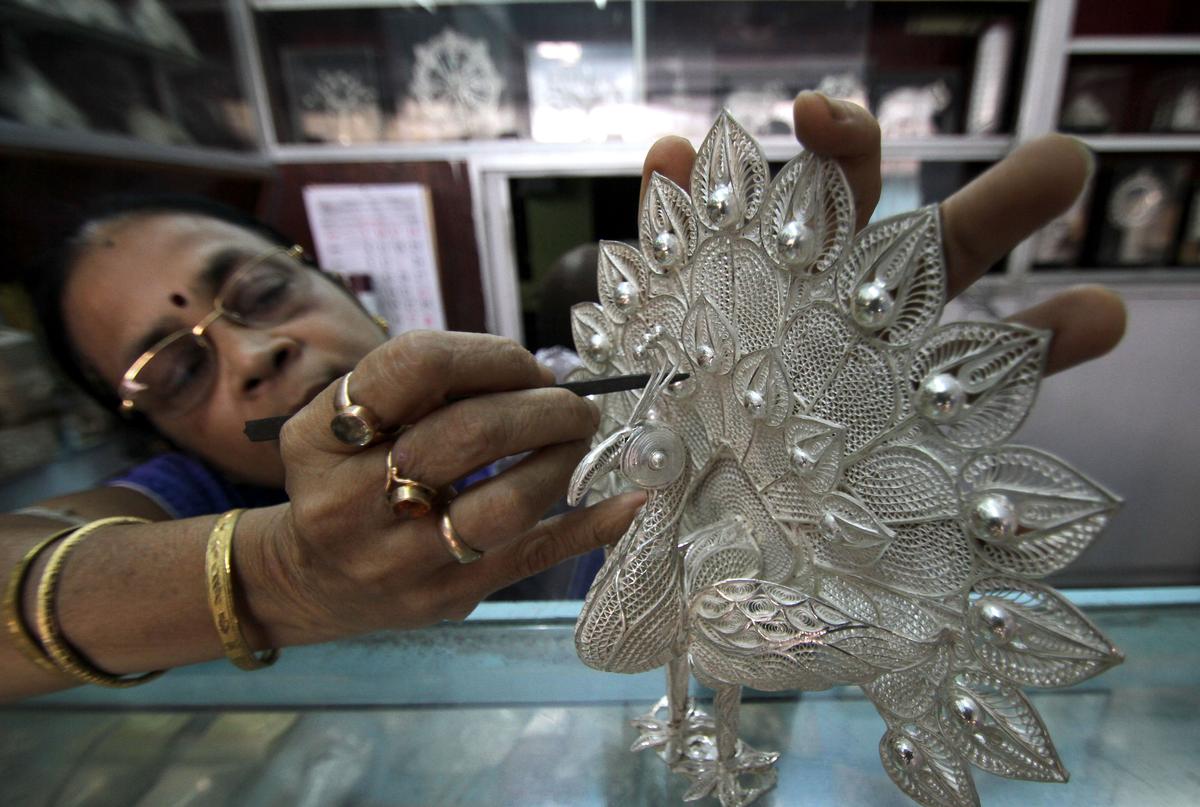
A Tarakasi artisan in Cuttack.
| Photo Credit:
Biswaranjan Rout
Health concerns
Tarakasi artisans are prone to several occupational health risks as a result of sitting, standing and bending for long periods of time, leading to high risk of musculoskeletal disorders. According to a 2023 study by The Pharma Innovation Journal, over 95% of artisans report pain in various body parts, including lower and upper back, neck, shoulders, hands, knees, fingers and legs. These occur due to the involvement of repetitive and focused manual activities that demand static effort and precision, the study says. While 64% of workers experience mild to moderate discomfort, a notable 12% suffer from acute pain. Interestingly, 5% of workers report no pain, likely due to long term adaptation to incorrect postures.
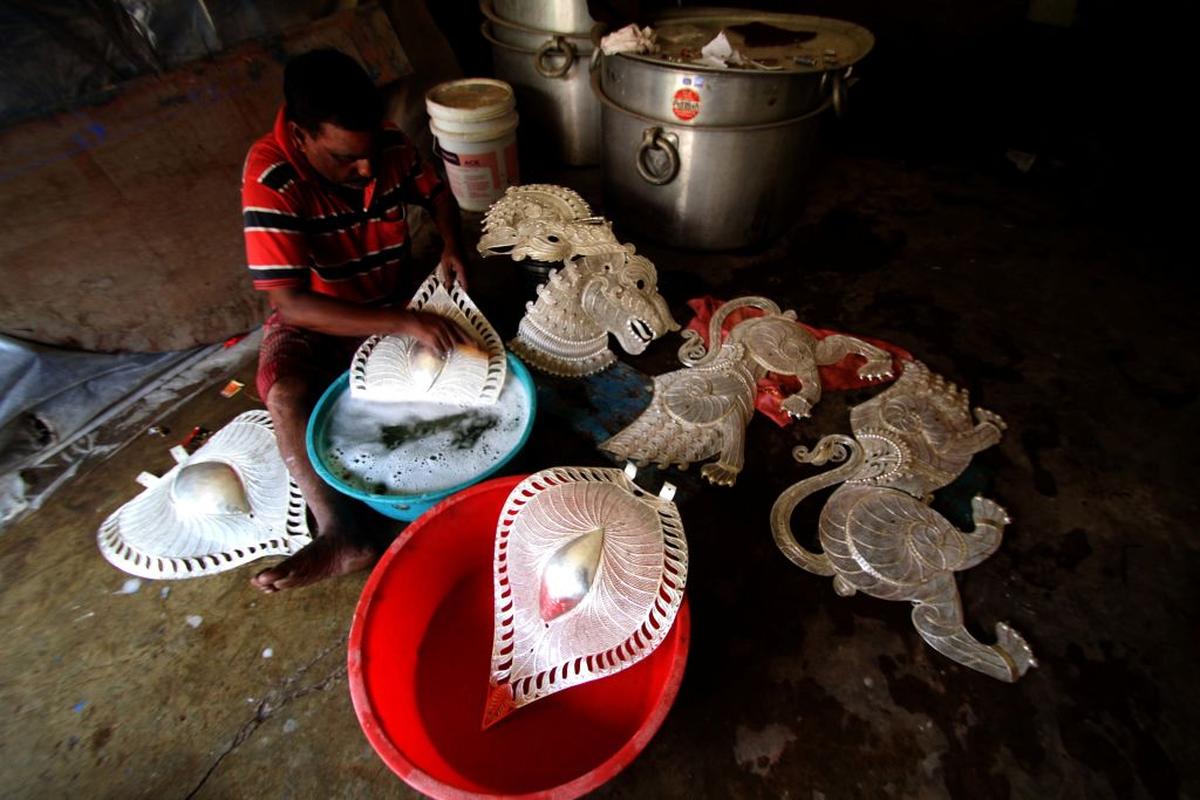
Workers keep sitting or standing with their backs bent for long hours to produce Rupa Tarakasi artefacts.
| Photo Credit:
Getty Images
The immediate need, as highlighted by artisans, is for incentives from the government. “Whenever the government of Odisha presents gifts to foreign delegates, they prefer the traditional craft of Tarakasi,” says Prakash Dash, who has been in the occupation for decades. Artists like him ask for subsidising of silver prices, grants for workshops and creation of dedicated hubs. “A small patch of land could act as a hub for artisans so that we can teach the craft to newcomers as well,” says Dash.
Despite diminishing profits, Cuttack’s Tarakasi craftsmen hope for a better future. Many have now taken to social media and other online platforms to showcase their creations. Will the wheel of fortune turn in their favour? Only time will tell.
The writers are independent journalists who focus on the environment, culture and human interest.
Published – March 28, 2025 10:35 am IST
[ad_2]
IThe Hindu