[ad_1]
On June 30 last year, when IT professional Kavya, who identifies as omnisexual, was leaving her apartment in Chennai to go join a Pride march, she was stopped by members of her housing association. The residents criticised her bold make-up and attire, and also threatened to reveal her queer identity to her house owner.
A week later, she was asked to vacate the flat. “It was a nightmarish experience,” says Kavya. “It was a breach of my privacy. I thought the apartment was my safe space where I could express myself.”
For Ayushi Mathur of Pune, Pride has always been a deeply emotional space — equal parts celebration and protest. “I remember my first march vividly: the nerves, the rush, and an overwhelming sense of belonging. There’s a beautiful power in being surrounded by people who reflect different fragments of yourself. Fashion has often been my refuge when words have failed me. I’ve used it to carve a space for myself, especially in environments that feel rigid or heteronormative.”
But it’s a double-edged sword, Mathur says. “At some Pride marches, I’ve felt quiet, like my look wasn’t ‘loud enough’ to be queer or ‘bold enough’ to belong. There’s sometimes this invisible yardstick about how ‘queer’ you’re allowed to look, which feels ironic in a space meant to celebrate individuality.”
Pride marches are both acts of protest and expressions of queer joy, demanding visibility, equality, and safety. According to some members of the LGBTQIA+ community, however, the spotlight has increasingly shifted towards fashion and performance over the years, with performative queerness often taking centrestage.
Stylised ideal
Kavya Dharini, a Hosur-based psychologist who identifies as gender-fluid, talks about the unspoken pressure to be either a “rainbow-drenched” symbol of Pride or to appear as a “respectable, digestible” queer person for cis-het audiences. “I’ve felt caught between both. As someone who doesn’t always want to be on either extreme, I’ve often felt like I’m not ‘queer enough’ or ‘visible enough’,” she says.
Mathur agrees that there is this curated image of queerness that’s become “market-friendly”. “I’ve felt the pressure to be either the glitter-covered extrovert or the buttoned-up queer. But the truth is, queerness isn’t one aesthetic. It’s a spectrum of expression. The pressure to conform — especially within a community that celebrates diversity — is a painful contradiction,” she says.
Psychologist Aanchal Narang, founder of Another Light Counselling, adds that a lot of younger queer people who are new to the community are often the ones to feel the weight of perception. “It is also internalised, in the sense that if you have grown up in a particular way for years, and if you suddenly see a bunch of people going around dancing, wearing feathers or extravagant make-up, there’s this distance that you want to keep between them and you.”
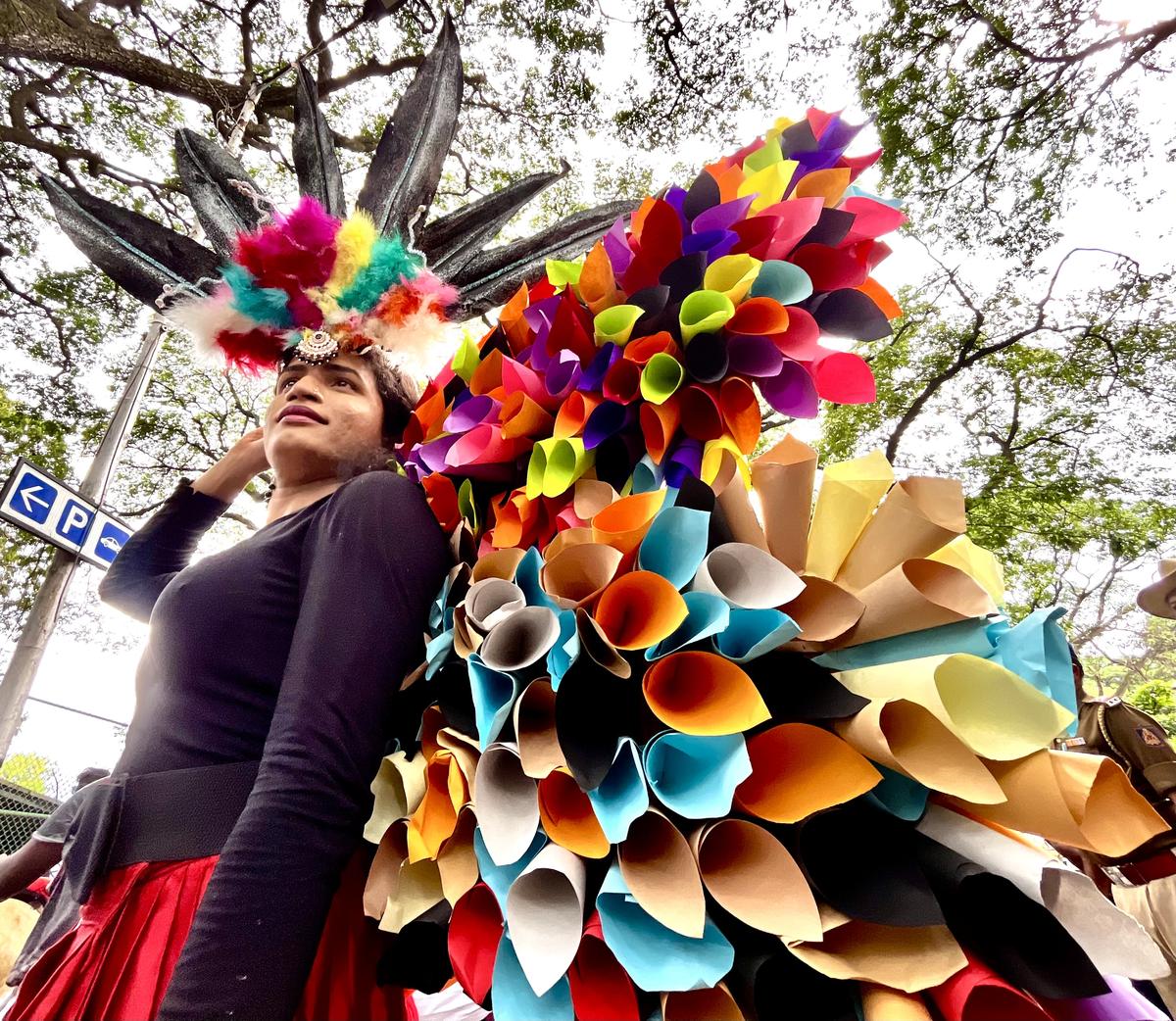
A scene from Pride march in Bengaluru.
| Photo Credit:
SUDHAKARA JAIN
Narang adds that a lack of spaces for the queer community, apart from drag shows, marches or Pride parties, may lend an added sense of pressure and social anxiety.
“When queerness becomes performative or tokenised, it often excludes those who don’t fit the mainstream, whether due to class, caste, neurodivergence, or simply by being less visible,” says Kolkata journalist and writer Sohini S. “Pride began as protest, but in many places, it now feels like a fashion show led by the most privileged. We need to make space for all queer experiences, not just the loudest.”
While she is glad that she has stepped into her bolder self, Kavya admits it wasn’t entirely by choice. “I’m introverted,” she says. “But being queer in today’s world is political. Even in progressive spaces, people assume you’re outspoken just because you’re queer. That expectation pushed me to perform a version of myself that wasn’t fully me. I’m proud of who I’ve become, but it’s disappointing that I had to change to feel accepted.”
Using the platform
For Leel Krishna, 20, a stylist from Chennai, Pride is anything but alienating. He describes his first Pride march in three words: “magical, belonging, and emotional”. “It evoked a deep sense of belonging, which emotionally empowered me to be openly proud” he adds.
Jaya, who identifies as a transwoman, is the general manager at Chennai NGO Sahodaran, which works for the upliftment of LGBTQIA+ persons. She is also one of the volunteers of the Tamil Nadu Rainbow Coalition, which organises Pride marches in the city. She calls it a celebration. “It is our festival. We show the world our struggle and fight in the form of celebration and festivity. Just like one dresses up for a festival, we too dress up for ourselves on that day.” Jaya says a lot of people use the march as a platform to show the world who they are, and to show their solidarity and their identity.
Whether styled up or dressed in a simple kurta, one cannot deny that Pride marches provide a space for the queer community to express themselves and foster a sense of belonging. Its ethos — of a liberating and judgement-free space — must be safeguarded at all costs, say LGBTQIA+ members, without succumbing to the pressures of commerce and representational politics.
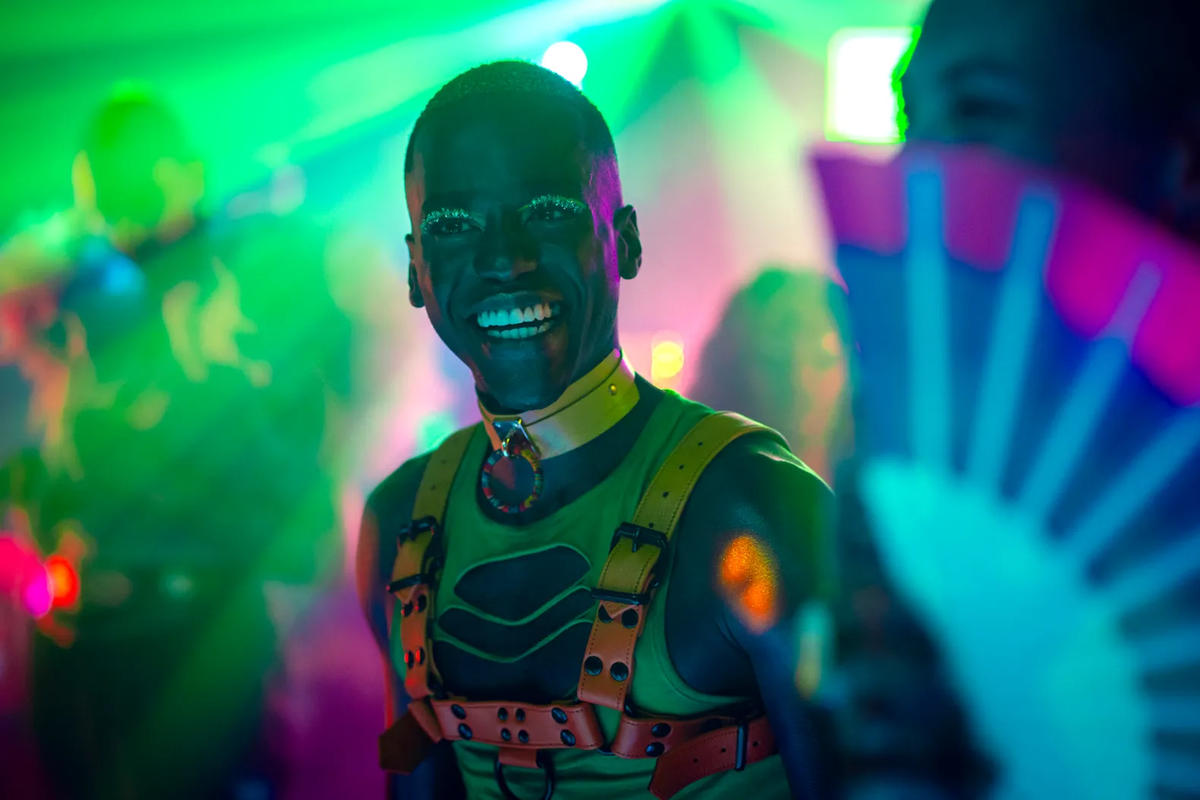
A still from Sex Education.
On-screen identity
Pride marches alone don’t add to the unseen burden of performative or visible queerness — films and social media do it, too. Movies that show being gay as bold, glamorous, and extroverted also limit the experiences of queer folx to a curated and consumable aesthetic.
“Years ago, when I was attending a gay group meeting for the first time, I spent more than 30 minutes trying to find the brightest shirt. It took me a long time to realise that this doesn’t define the community. It was just the pictorial reference point we grew up with because we only turned to American cinema then,” says Sharif D. Rangnekar, former journalist and human rights activist. He adds that the fashion and aesthetic in shows such as the hugely popular British series Sex Education, for instance, may be bold and vibrant, but not every queer person is like that. “Many have simple or quiet fashion preferences, and that should be valid too,” he says.
However, the new wave of OTT offerings offers hope. “Conversations around LGBTQIA+ issues in films and OTT have changed drastically over the last four to five years. I see that change more so after the reading down of Section 377 in 2018. There have been more positive portrayals in the OTT space — for instance, Made in Heaven,” says filmmaker Sridhar Rangayan. He adds that in all his films, he has worked with trans actors playing trans parts, as they bring authentic ‘lived’ portrayals to the screen.
Published – June 26, 2025 03:00 pm IST
[ad_2]
The Hindu