[ad_1]
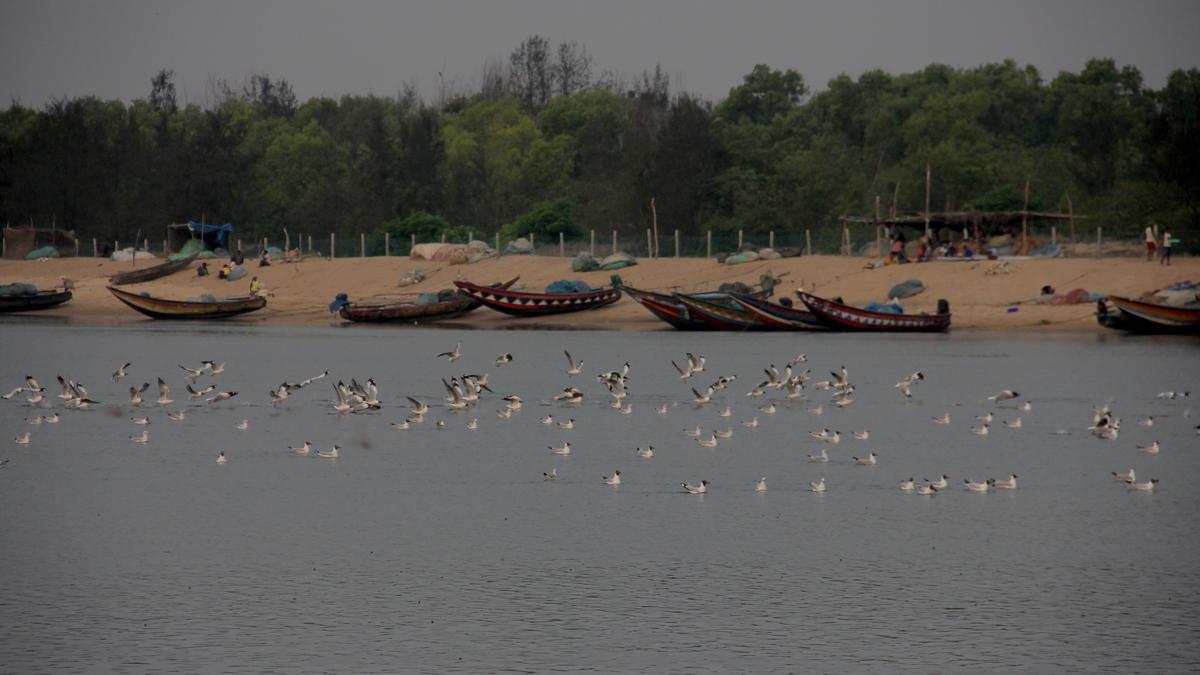
Fishing boats are seen on the banks of the Rushikulya river mouth beach. File
| Photo Credit: The Hindu
A 10-day padayatra covering nearly 100 villages along both banks of the Rushikulya River in Odisha’s Ganjam district concluded on Tuesday with a call to halt the proposed dam, warning that it would obstruct the river’s natural flow.
Also Read | Rushikulya mass nesting site in Odisha sees record arrival of 6.5 lakh Olive Ridleys
Green activists and villagers had started the padayatra on March 16 from Pipalapanka forest, where the dam is proposed to be constructed.
“The Pipalapanka forest serves as the primary water source for the Rushikulya River, a vital lifeline for Ganjam district. However, reservoirs have long been constructed on each of its key tributaries – Jarau, Badanadi, Baghua, Dhanei, and Ghodahada – preventing them from contributing any water to the Rushikulya during the summer months,” Prafulla Samantara, President of Lokshakti Abhiyan and a Goldman Environmental awardee, said.
Also Read | Drought looms large over Kashmir Valley as springs dry up, rivers recede
“The dam will obstruct the natural flow from Pipalapanka to the Ganjam mouth of the Bay of Bengal from November to June, causing the river to dry up completely. This will disrupt its ecology, render all lift irrigation pumps inoperative, and leave tanks and wells without water as groundwater levels decline,” said Mr. Samantara.
He alleged, “the dam was proposed in 1996 for Tata Steel company at Gopalpur but it had triggered massive protest in which many progressive political leaders were involved and it forced the then government to stop the project. Now, it seems the proposed dam will cater to industrial need and Gopalpur Port of Adani Group.”
During past two years, people under banner of Rushikulya Suraksha Action Committee had been campaigning against the dam and illegal sand mining which had caused irreparable harm to river ecology. Since 1996, the climate change had caused erratic rainfall furthering reducing water flow into Rushikulya.
“Backwater of Bay of Bengal through Rushikulya river mouth was changing character of river water which is becoming salty affecting drinking water supply and fishery. If the natural flow of water does not flow into Rushikulya due to proposed dam, there would not be sweet water,” he pointed out.
Activists Sudhir Raut, Bhal Chandra Sadangi, Simanchal Nahak, Aditya Rath, Sudarshan Das, Arun Jena, and Shyam Samundar Khadanga also participated in the 10-day-long padayatra.
Published – March 25, 2025 10:02 pm IST
[ad_2]
IThe Hindu