[ad_1]
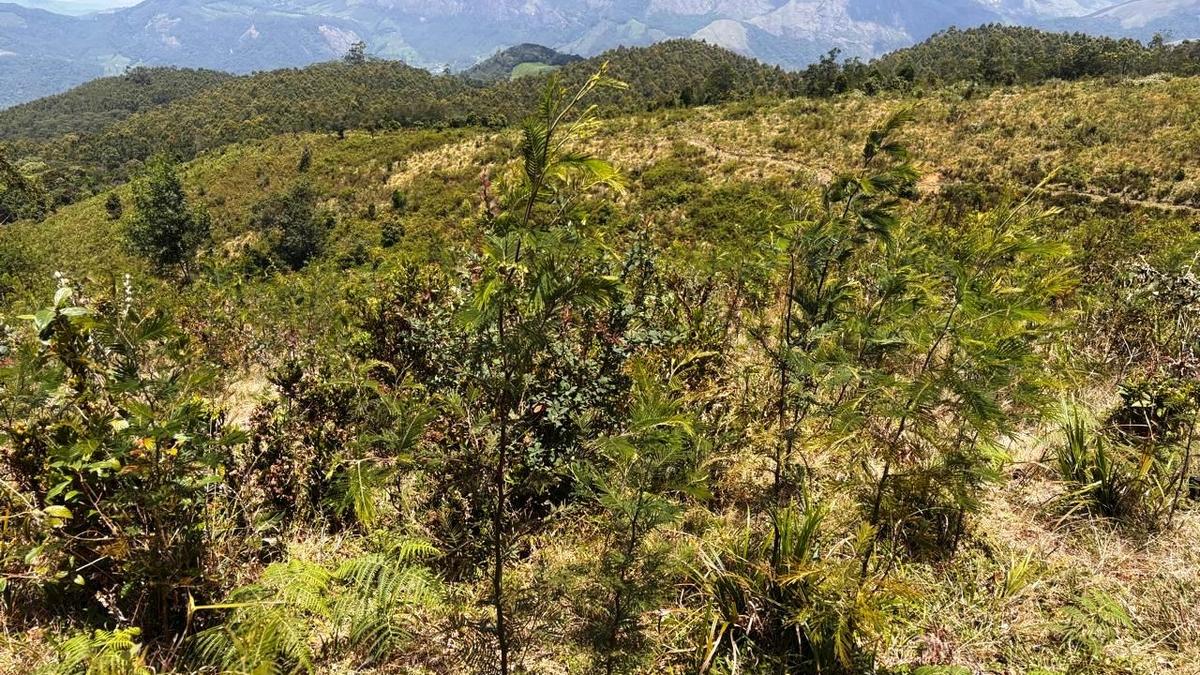
The exotic species filled grass land at Gundumala near Munnar in Idukki.
| Photo Credit: SPECIAL ARRANGEMENT
Lack of follow-up action and monitoring have resulted in invasive plants gaining ground once again in the grasslands of Munnar.
During 2018-21, the Forest department had implemented an eco-restoration project and cleared exotic plants on 60 hectares of forest land at Gundumala, under the Kanan Devan Hills reserve, in Munnar in Idukki.
Sources said exotic Acacia mearnsii(black wattle) trees were removed and natural grasslands restored in the area. The restoration of the grasslands ensured food security for wild elephants and reduced wild animal incursions into habitations. But without proper maintenance, the area was again filled with exotic species.
The sources said proper monitoring and removal of new saplings of exotic trees must be done for at least 10 years to maintain the natural health of grasslands. However, at Gundumala, the area was not properly monitored, which led to the growth of exotic trees once again.
The lack of natural forests in the Munnar forest range had led to a rise in human-animal conflict cases. “Wild elephants are camping in the Munnar panchayat-owned waste dumping yard at Kallar to eat vegetable waste,” the sources said, adding that wild elephants could be seen consuming plastic-filled waste in the yard.
Forest department sources said of the 25 sq km Kanan Devan Reserve, 20 sq km was filled with exotic trees and plants. “The exotic species have started spreading to natural forests. Wild animals, including wild elephants, depended on these shola forests and grasslands for food. After the Forest department planted exotic species in the KDH reserve, food availability came down and animals started to venture out to tea plantations and settlements in Munnar town for food, resulting in human-animal conflict cases,” said the source.
“Eco-restoration is essential to prevent human-wildlife conflicts. Weeds prevent regeneration of other plant species, resulting in food scarcity for wildlife. As a result, wild animals enter habitations resulting in conflict,” said the source.
The Forest department’s had successfully implemented eco-restoration projects at Anamudi Shola National Park in Munnar and the Marayur Sandal Division.
Published – June 24, 2025 07:35 pm IST
[ad_2]
The Hindu