[ad_1]
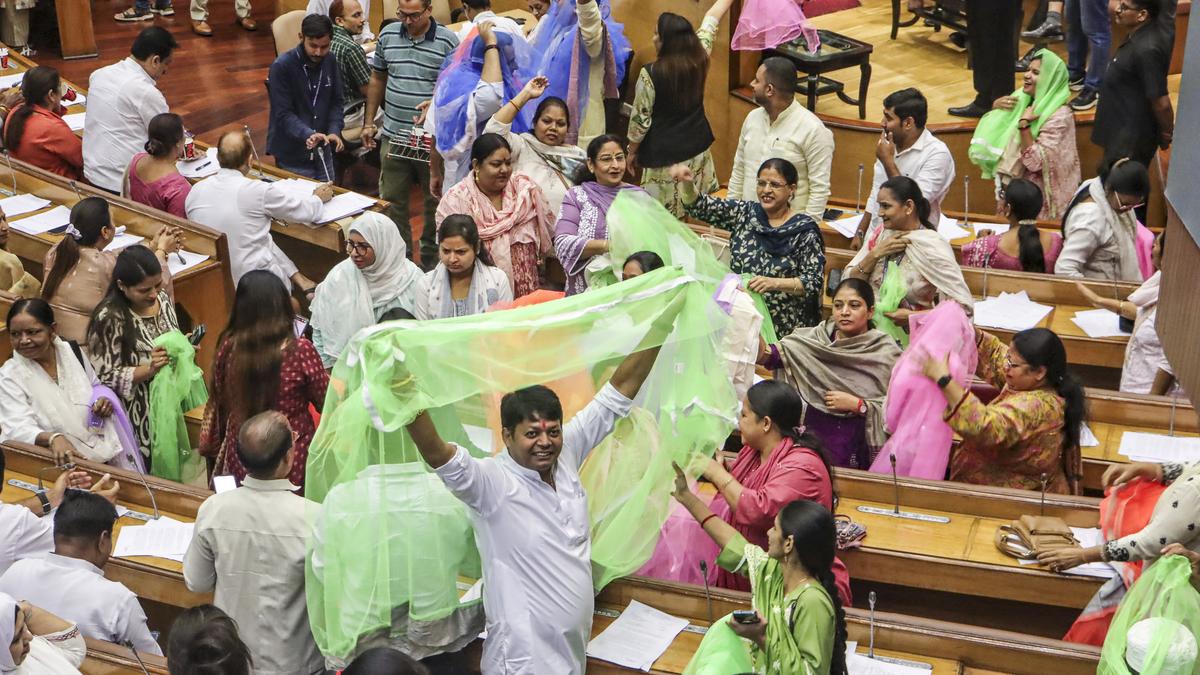
AAP councillors protest with mosquito nets in the MCD House meeting on Friday over the rise in malaria cases.
| Photo Credit: PTI
The Municipal Corporation of Delhi (MCD) on Friday extended its one-time property tax amnesty scheme 2025-26, Sampattikar Niptaan Yojana (SUNIYO) till December 31, citing overwhelming response from citizens.
Announcing the decision in the House meeting, Mayor Raja Iqbal Singh said, “The SUNIYO scheme has received appreciation from taxpayers, which is why we are extending it by three more months. This will give more citizens the opportunity to settle their dues.”
While the terms remain unchanged, a 2% late fee will now apply on principal tax amounts paid between October 1 and December 31. The scheme offers a complete waiver of interest and penalties on pending property tax dues prior to 2020–21, provided taxpayers clear the principal amount for the ongoing year (2025–26) along with arrears from 2020–21 to 2024–25.
Since its rollout in June, 1.16 lakh taxpayers have availed the scheme. Overall, MCD’s property tax collection until September 23 in this financial year has touched ₹2,111.63 crore from 11.63 lakh taxpayers, which is a 22.5% rise in revenue and an 18% increase in the taxpayer base compared to the same period last year.
Protest over rise in malaria cases
Meanwhile, Aam Aadmi Party (AAP) councillors attended the meeting wearing mosquito nets as a protest against the rise in dengue and malaria cases. Leader of the Opposition Ankush Narang said, “Delhi has recorded 36 new malaria cases in the last week alone, taking the total to 333, the highest in five years. Dengue and chikungunya cases are also rising, yet the BJP has no clear strategy or campaign.”
Responding to the claim, the Mayor assured the House that preventive measures had been stepped up, including medicine stockpiling, fogging drives, and stricter field inspections. “We are committed to protecting citizens and will not tolerate negligence in disease control,” he said.
Published – September 27, 2025 12:48 am IST
[ad_2]
The Hindu