[ad_1]
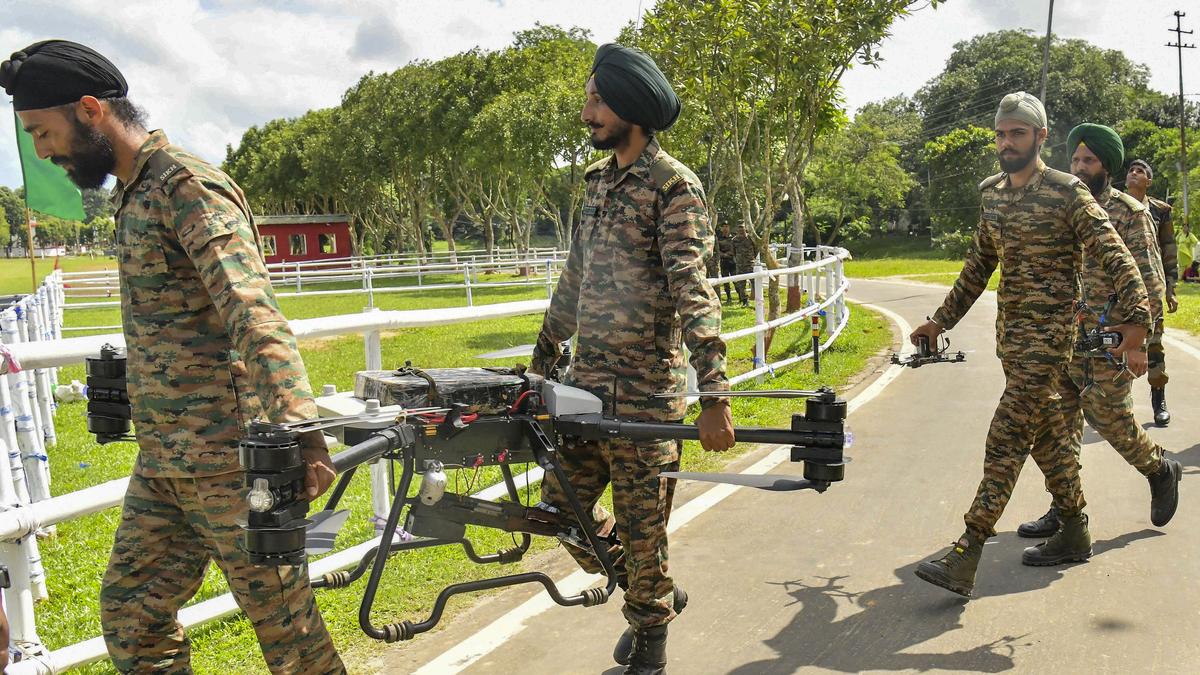
Officials described it as the biggest such drill since Operation Sindoor, aimed at assessing the effectiveness and shortcomings of current air defence capabilities. File image for representational purposes.
| Photo Credit: PTI
In the first week of October, India will conduct a large-scale joint exercise named ‘Cold Start’ in the Central Sector to test existing drone and counter-drone systems.
Officials described it as the biggest such drill since Operation Sindoor, aimed at assessing the effectiveness and shortcomings of current air defence capabilities.
Confirming the development, a senior official said the upcoming exercise will focus on evaluating operational readiness against evolving aerial threats.
Also read | A war game-changer in a battle for influence in Asia
Speaking at a conference on “Counter UAVs & Air Defence Systems – The Future of Modern Warfare” organised by the PHD Chamber of Commerce and Industry (PHDCCI) in Delhi,
Air Marshal Ashutosh Dixit, Chief of Integrated Defence Staff, who was the Chief Guest at the event, made a pointed reference to Pakistan.
“They too are working to become like India, so we must always stay a step ahead. Our counter-drone and GPS jamming systems performed effectively during Operation Sindoor, ensuring no damage from adversary drones. But the adversary has also learned our capabilities. Next time, we have to be ahead and much better.”

Rakesh Sinha, Deputy Chief of the Integrated Defence Staff (Operations), who was Guest of honour at the event said, “The future of warfare will be shaped by the ongoing race between drones and defensive measures. Nations investing in counter-drone systems will gain a strategic edge. Counter-drone technologies must evolve continuously to address not only current but also future drone capabilities.”
He underlined that effective systems must be capable of precise detection and identification in complex electromagnetic environments, with proportional engagement strategies that avoid collateral damage. Seamless integration with existing air defence assets and the use of AI for rapid classification and response, he added, are crucial for scalable and field-ready solutions.
Published – September 23, 2025 02:57 pm IST
[ad_2]
The Hindu