[ad_1]
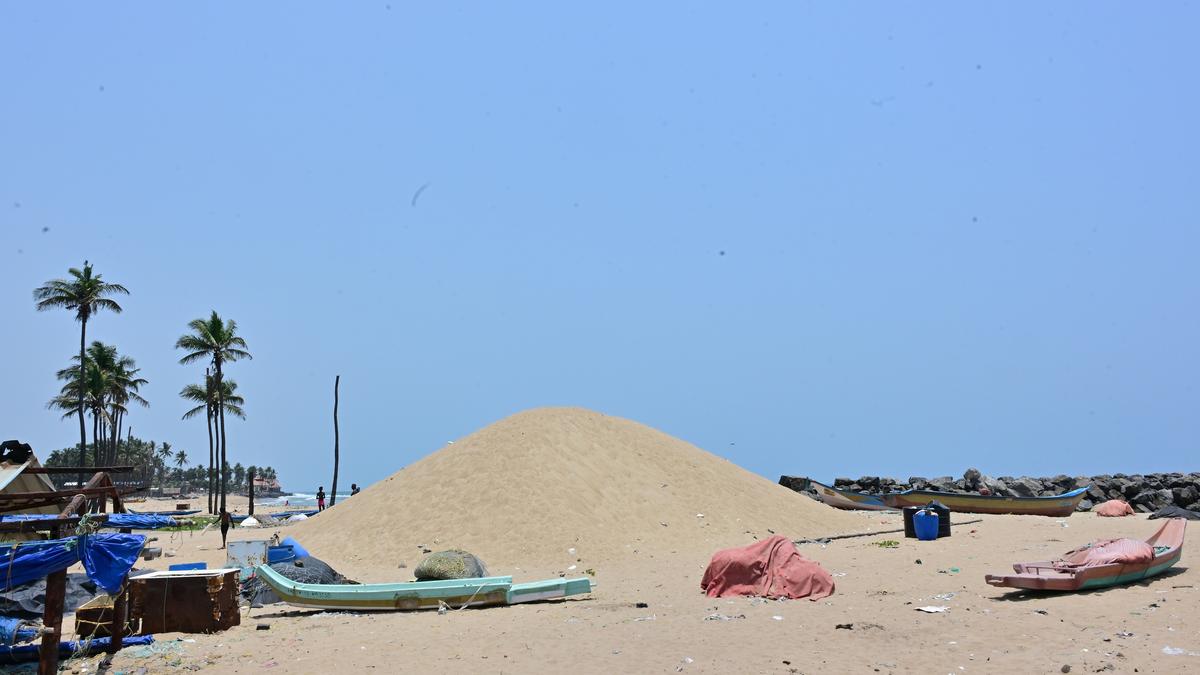
Fishermen point out that the design of groynes is not optimal for the local conditions.
| Photo Credit: B. VELANKANNI RAJ
To protect coastal areas from erosion and safeguard fishing communities, the Fisheries Department recently built groynes along the coast of Chengalpattu district.
Though intended to prevent erosion, groynes can disrupt natural sediment flow, worsening erosion to the north due to the longshore drift along the coast. They have provided temporary relief, but also created new challenges for local fishermen, especially in terms of boat access and shoreline usability.
Fishermen from several coastal villages, including Karikattukuppam in Muttukadu, say the groynes are causing problems. Surya, a fisherman from Karikattukuppam, pointed out that the groynes had not been built correctly.
“Since the groynes were built, silting has started to occur near the shore, making it difficult for our boats to approach the shore properly,” he said.
The silting issue has led to additional difficulties. Villagers had the beach sand scooped up and piled further inside the shore to facilitate the movement of their boats. However, this is only a temporary solution and does not address the long-term design flaws of the groynes, says Mr. Surya. Another fisherman, Senthil, pointed out that the design of groynes was not optimal for the local conditions. “They should have been placed at a certain angle in the sea to reduce interference with boat movement,” Mr. Senthil said.
“Tetrapods should have been placed on their sides to restrict boat entry. When the sea is rough, it’s nearly impossible to bring our boats in safely,” he added.
He also said that consultation with fishermen, who have local knowledge of the shoreline, could have prevented these issues.
Published – April 23, 2025 02:19 am IST
[ad_2]
The Hindu