[ad_1]
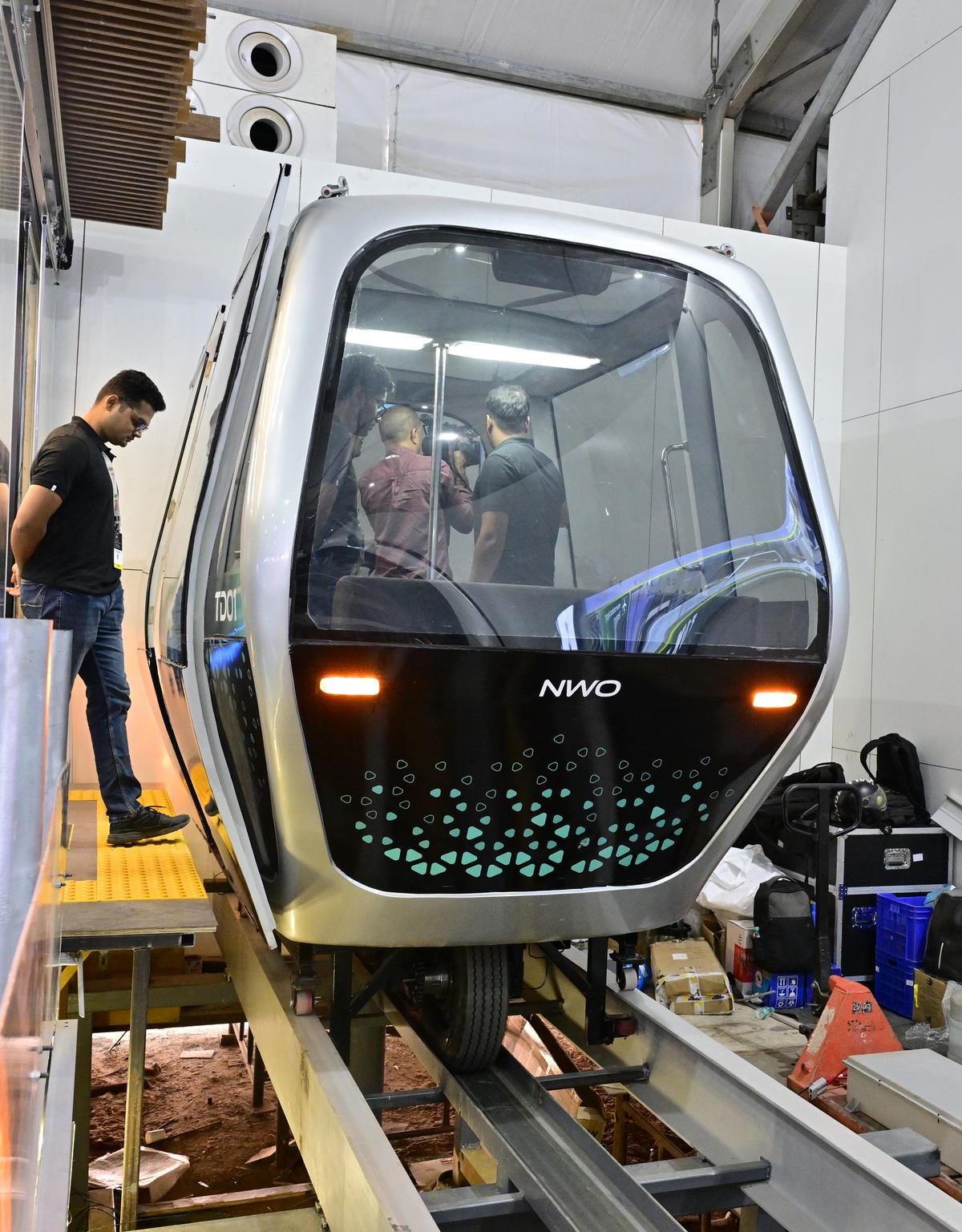
An all-electric pod-based transportation system displayed during the valedictory ceremony of ‘Invest Karnataka 2025’ in Bengaluru on Friday.
| Photo Credit: K. MURALI KUMAR
The Clean Mobility Policy 2025–2030, which aims to attract investments worth ₹50,000 crore and create one lakh new jobs in the State, was unveiled by Energy Minister K.J. George on Friday at Global Investors’ Meet: Invest Karnataka 2025.
“With the Clean Mobility Policy 2025-2030, Karnataka is not just reinforcing its leadership in India’s EV sector but also pioneering the future of green transportation across Asia. By integrating advanced technology, fostering strategic investments, and implementing a comprehensive policy framework, the State aspires to become a global hub for clean mobility innovation and manufacturing,” the Minister said.
Karnataka, which was the first State to unveil an electric vehicle (EV) policy back in 2017, aims to reduce carbon emissions, enhance air quality, and position itself as a leader in the global shift towards sustainable mobility through the new policy. This policy also offers subsidies of up to 25% on total invested capex in clean mobility across the State, including Bengaluru Urban and Bengaluru Rural districts which are eligible for a 20% capex subsidy.
Establishing an additional 2,600 EV charging stations through public-private partnership in the State along with the existing 5,403 charging stations which serve the 2.5 lakh registered EVs, development of clean mobility clusters in Gauribidanur, Dharwad, and Harohalli, to bring together original equipment manufacturers, suppliers, research and development centres along with testing facilities, capital subsidies for the development of fast-charging stations, battery-swapping networks, and hydrogen fuelling stations are some of the other important features of the policy.
The policy also looks to collaborate with global institutions to boost innovation and skill development by expanding EV-focused training programmes in ITIs, polytechnics, and universities. It also aims to build a specialised workforce through this for the clean mobility industry.
Published – February 14, 2025 09:26 pm IST
[ad_2]
IThe Hindu