[ad_1]
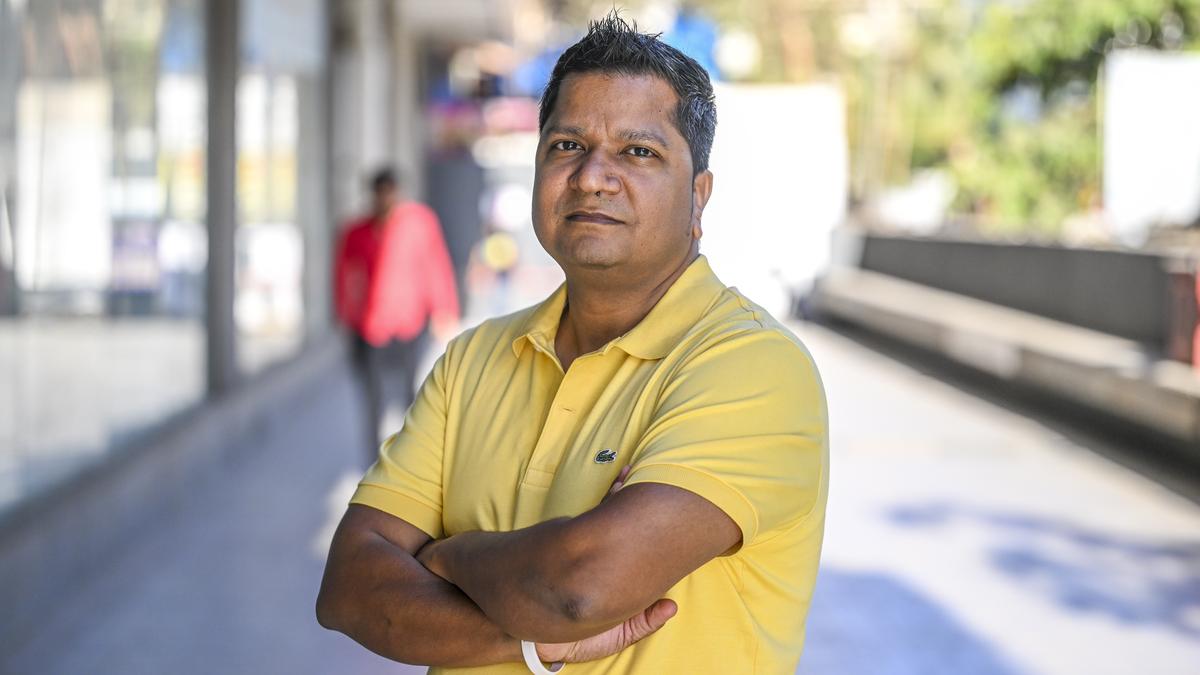
Vivek Sharma is founder of Uhapo, a social enterprise that assists cancer patients and caregivers.
| Photo Credit: Emmanual Yogini
Life can crash-land and go up in flames in six hours. Your only child, a healthy five-year-old sunbeam, your primary source of joy, can step off the school bus, devour his snack, head off for a nap — and never wake up. How does any parent find the strength to emerge from this?
Vivek Sharma, 41, once a marketing professional who wanted a family, car, house and job, has spent the last decade remaking himself after his son fell into a state of unconsciousness due to a bleeding oesophagus and passed away hours later. “If someone had asked me then, ‘What is the purpose of your life?’ my answer would have been very different,” says Sharma, who was born in Delhi, brought up in Kanpur, and moved to Mumbai with a suitcase of standard issue dreams. “Now I don’t value any material thing. I believe I have been chosen to do something that nature wanted me to do.”
Like all of us, Sharma says on a podcast, he is a storehouse of memories from faraway times that can jostle their way back to centrestage, as if they were freshly minted. In our conversation, I’m guilty of making him relive some of his best and worst memories. “Very tasty, mumma,” Amogh, a gentle, nature-loving boy, would tell his mother Sweta every time he ate her food.
Pain and a superpower
Amogh’s sudden death in 2014 — at the same hospital where he was born — marked the starting point of a journey that led to a book and podcast (both titled God Is Not Fair?) and several cancer-related start-up ventures, in partnership with Sweta, all with a singular purpose. “Transforming other people’s lives is the only purpose of living,” says Sharma. “Pehle meri aukat nahi thi.” Earlier, he believes, he wasn’t ready. Sharma’s suffering gave him a new superpower.
His podcast, which ran for five years, logged a million listeners. The first episode of his new podcast Dil Ka Haal Sune Dilwala is just out on YouTube where he discusses loneliness and solitude, and harnessing the power of storytelling to heal and inspire people.
The couple’s decade-old social entrepreneurship venture Uhapo was set up after a series of smaller efforts, including a cancer awareness foundation — named after his son and his classmate’s cousin who had cerebral palsy — and a matrimonial site for cancer survivors that has brought together 56 couples since 2018. The name is from the Hindi word uhapoh meaning a state of uncertainty or ambiguity. Sharma says that by removing the h, he is metaphorically clearing the doubts and offering clarity.
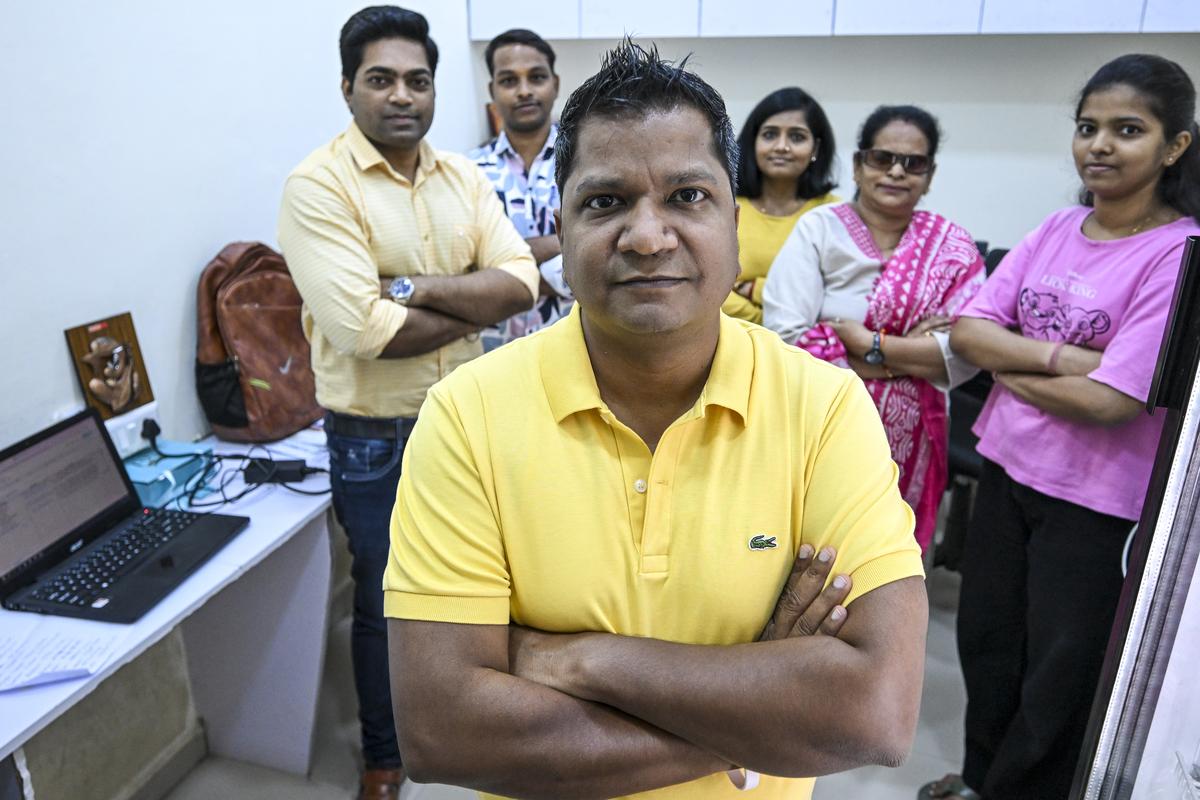
Vivek Sharma with the Uhapo team.
| Photo Credit:
Emmanual Yogini
In his conversations with cancer survivors, Sharma realised there was a vacuum in their lives. He confirmed this when he surveyed around 700 patients and their caregivers. “Nobody knows why cancer happens. And everyone wants to know ‘Why did it happen to me?’” It was a feeling Sharma could identify with, and one that likely made him plunge headlong into helping those who face this disease. For a small fee, Uhapo helps people navigate cancer, connecting them to psychological support, diagnostics, government schemes and other financial aid, among many other things. One study last year said India was on track to become the “cancer capital of the world”, predicting that the country would see 1.57 million cases of cancer in 2025.
For three years, Sharma has organised an annual Cancer Conclave in February that is always inaugurated by a cancer survivor or their caregiver. This year, representatives from the ministry of health also attended.
Finding survivors
After their son’s death Sharma and his wife became depressed. “I tried to resume my work. I used to be happy-go-lucky, now I was changed,” he says. “Colleagues tried to cheer me up. They said things like ‘you can try again’ but a friend understood. She knew I had attempted suicide and told me to try documenting my thoughts.”
Sharma was convinced nobody would be interested in his story, and so he decided to write about others who had survived knockout punches and turned their grief into something big. Those who had fashioned new beginnings from the worst endings. He travelled across the country and found many such stories but most people didn’t want the world to know they had attempted suicide or battled depression. The book was eventually published with five stories during the COVID-19 pandemic.
Sharma has seen this same reluctance to share stories publicly in cancer survivors too, especially from those who are more privileged. “The taboo of being a cancer survivor among the upper classes is still very high,” he says, pointing to the fact that when a Steve Jobs dies of pancreatic cancer it isn’t hidden but when “big people” here die of cancer nobody knows.
Sharma and Sweta have three daughters now. The youngest, Amogha, is nine months old. Sharma says the couple only stopped crying together every morning eight years after their son died. “It became muscle memory,” he says. “I can’t tell you how good it feels that we don’t cry now.”
(Assistance for overcoming suicidal thoughts is available on Tamil Nadu’s health helpline 104 and Sneha’s suicide prevention helpline 044-24640050)
The writer is a Bengaluru-based journalist and the co-founder of India Love Project on Instagram.
Published – March 27, 2025 02:05 pm IST
[ad_2]
The Hindu