[ad_1]
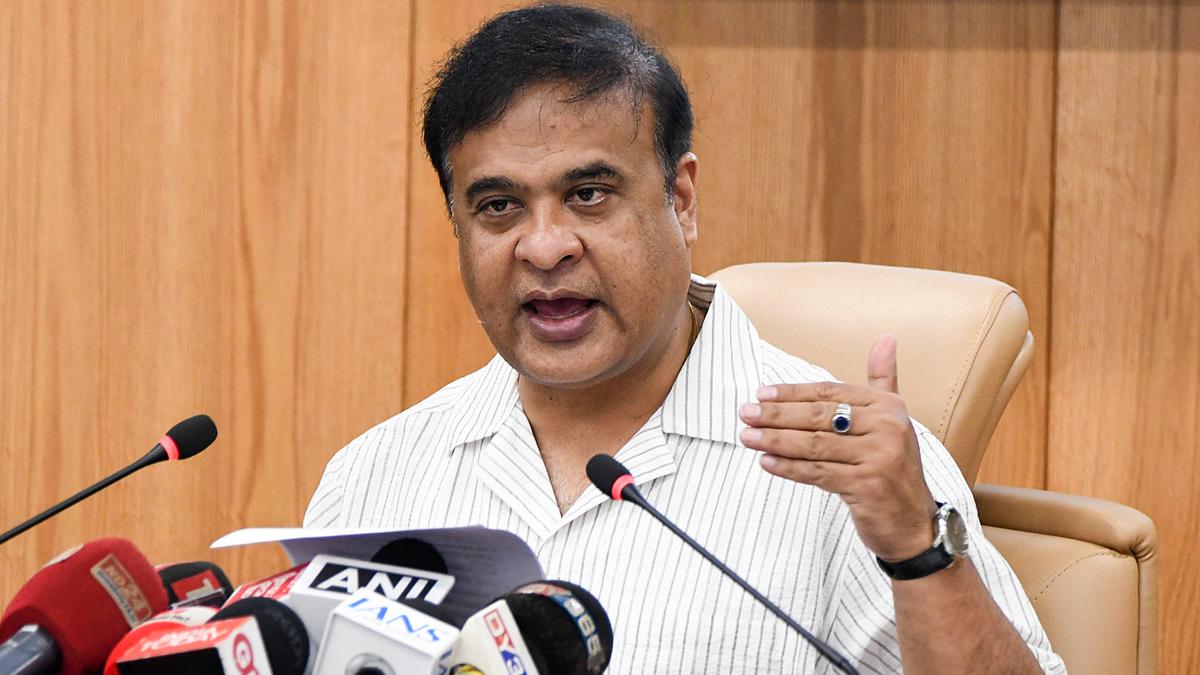
Assam Chief Minister Himanta Biswa Sarma.
| Photo Credit: ANI
GUWAHATI
Assam Chief Minister Himanta Biswa Sarma, on Thursday (May 29, 2025), clarified that his government’s arms licence policy will not be applicable along the State’s borders with Arunachal Pradesh, Meghalaya, Mizoram, and Nagaland.
Assam has had bloody border disputes with these four northeastern States, claiming more than 200 lives over more than five decades. The border disputes with Arunachal Pradesh and Meghalaya have been resolved partially.
On Wednesday, the Assam Cabinet approved a policy to issue arms licences to “original inhabitants and indigenous communities” living in vulnerable and border regions.
“There were some queries regarding whether the arms license policy would also apply to inter-State border areas such as those shared with Meghalaya, Arunachal Pradesh, Mizoram, and Nagaland,” he posted on X.
“Let us clarify: Assam has always maintained that inter-State border issues are matters that can and should be resolved through mutual understanding and trust. We do not view these regions as vulnerable in the context of national security threats. Accordingly, the arms license policy will not be applicable to the inter-State border areas of Assam,” the Chief Minister said.
“The Government of Assam firmly believes that inter-State boundary issues are not security vulnerabilities, but matters best resolved through understanding and peaceful negotiation,” he said.
According to the Cabinet decision, the arms licence policy will be applicable in the Barpeta, Dhubri, Goalpara, Morigaon, Nagaon, and South Salmara-Mankachar districts. Bengali-speaking Muslims are a majority in these districts, two of which — Dhubri and South Salmara-Mankachar — border Bangladesh.
“The Cabinet decision is important and sensitive. The indigenous people in these districts live in an atmosphere of insecurity due to the recent developments in Bangladesh. They face the threat of attacks from the Bangladesh side and even in their own villages,” Mr. Sarma told journalists.
Insisting that the objective of the Cabinet decision was not to militarise the indigenous populations, he said the people in the vulnerable areas have been demanding arms licences for a long time.
“The government will be lenient in providing arms licences to eligible people, who must be original inhabitants and belong to indigenous communities. The government will not help such people living in vulnerable areas buy arms,” he said.
“Casting doubts on BSF”
Reacting to the Cabinet decision, Trinamool Congress MP Sushmita Dev from Barak Valley said the arms licence policy “takes the credibility of the Assam government to zero.”
She said the decision conveys a message to the people in border areas that the Border Security Force and the Assam police cannot protect them from “illegal immigrants” and issues from across the (Bangladesh) border.
“The government can issue an arms license, but cannot tell someone what he can or cannot use a gun for. Once a person gets a gun, he can use it against anybody,” she said.
“Lastly, till today, nobody knows the proper definition of indigenous people. It is the Chief Minister of Assam who wakes up in the morning and decides who’s indigenous and who’s not. The NRC [National Register of Citizens] is in a hanging position. This issue has been raked up only because elections are round the corner,” Ms. Dev.
She said the arms license policy sets a bad precedent and conveys to the country that the people of Assam are not safe under the “double-engine sarkar”.
Published – May 29, 2025 12:36 pm IST
[ad_2]
The Hindu