[ad_1]
The Triveni Sangam is a major destination for Hindu pilgrimages. The origin of the Kumbh Mela is attributed to eighth-century Hindu philosopher Adi Shankaracharya, who promoted regular gatherings of spiritual leaders and ascetics, and also instituted the monastery system and the 13 akharas (warrior-saint sects). Kumbh Melas are held every three years with a 12-year cycle for the Maha Kumbh – commencing along the riverbanks in Haridwar, then Ujjain, Nashik and culminating with the Maha Kumbh in Prayagraj.
According to Hindu legend, when Lord Vishnu, in the guise of Mohini, carried the pot of amrit (nectar) during the Samudra Manthan (churning of the ocean), a scuffle ensued leading to four drops falling at Prayagraj, Haridwar, Nashik and Ujjain – creating four Tirthas (holy sites). Devotees believe that a dip in the rivers flowing through these Tirthas (Ujjain – Kshipra, Nashik – Godavari, Haridwar – Ganga and Sangam at Prayagraj – the confluence point of rivers Ganga, Yamuna and the mythical Saraswati) will lead to salvation.
Here is a display of photos from one the world’s largest religious congregation.
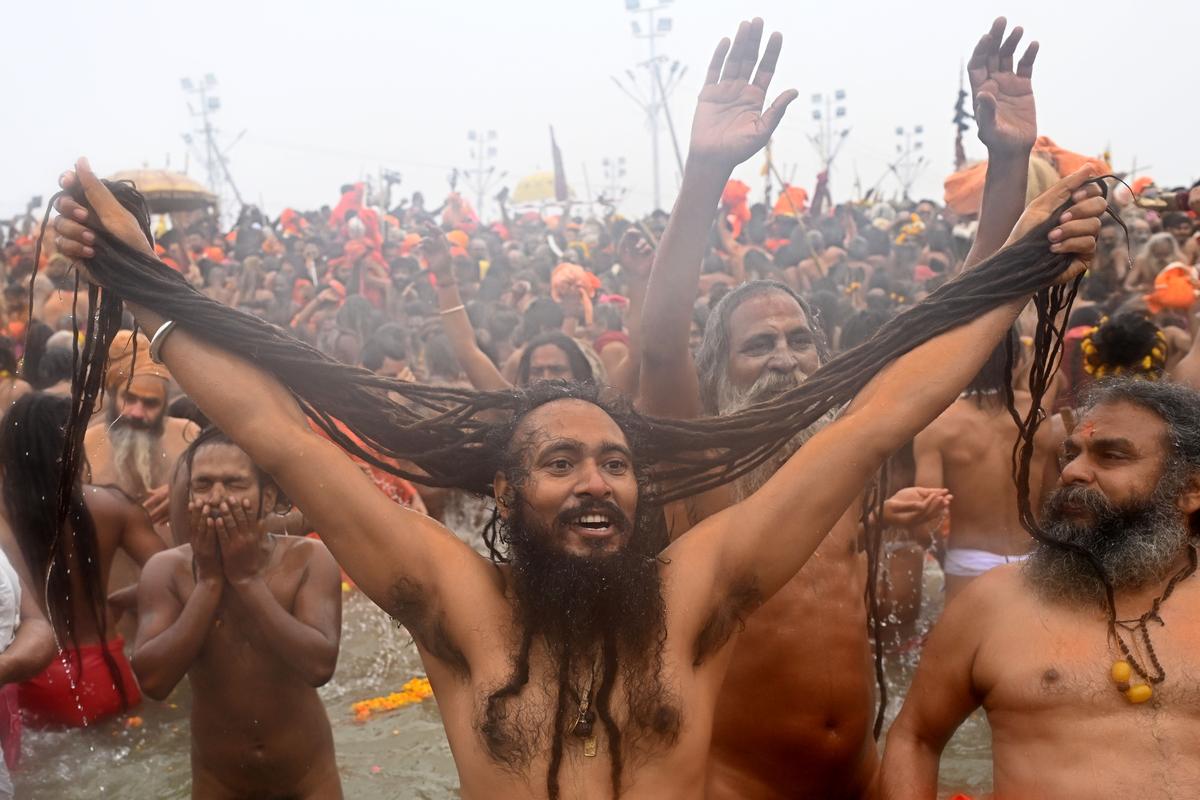
Photo:
SANDEEP SAXENA
Sadhus from the ‘Juna Akhada’ sect taking a holy dip/Amrit snan at Triveni Sangam, a sacred confluence of the Ganges, Yamuna and Sarasvati rivers on makar sakranti at Maha Kumbha 2025 at Prayagraj on Tuesday, January 14, 2025.
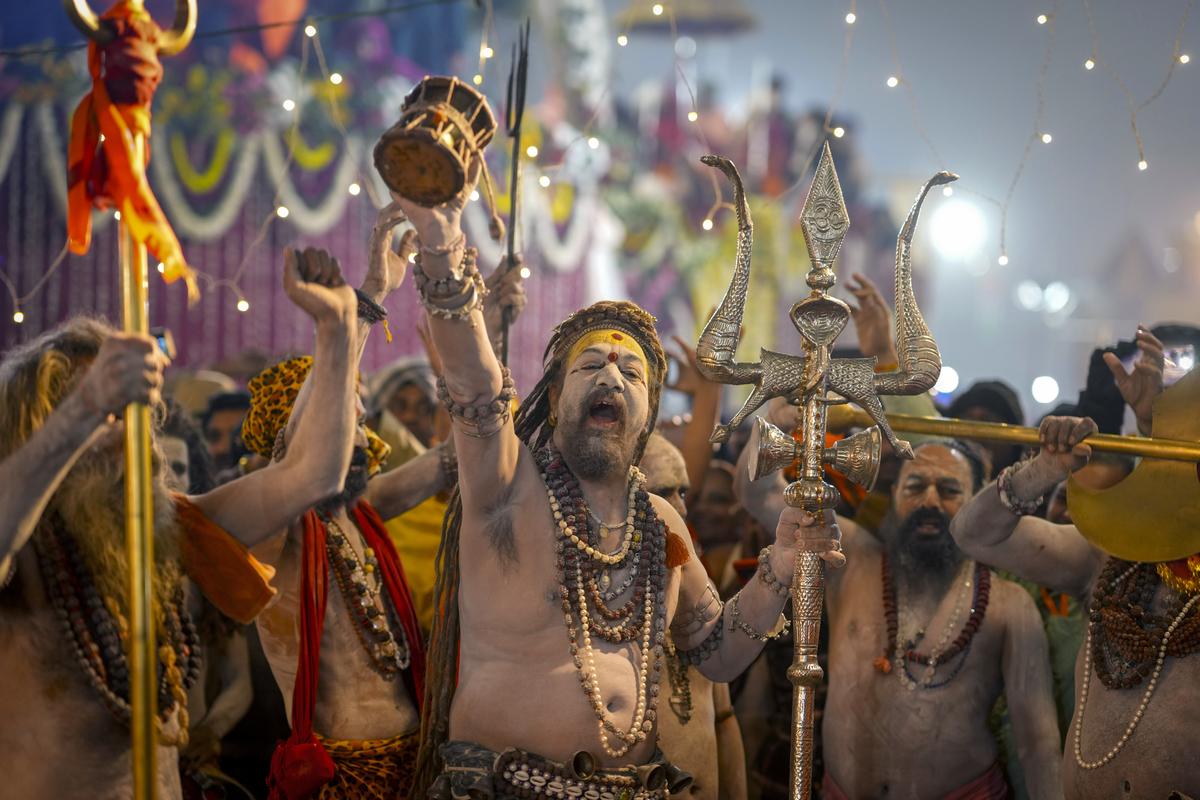
Photo:
AP
Naga Sadhus of Niranjani Akhara attend a ritual dip at Sangam, on Makar Sankranti day, during the Maha Kumbh festival in Prayagraj, Uttar Pradesh on, Tuesday, January 14, 2025.

Photo:
SANDEEP SAXENA
The Naga sadhus are fascinating, with their unique appearances and rituals. One such sadhu, takes an “Amrit Snan” in Prayagraj.
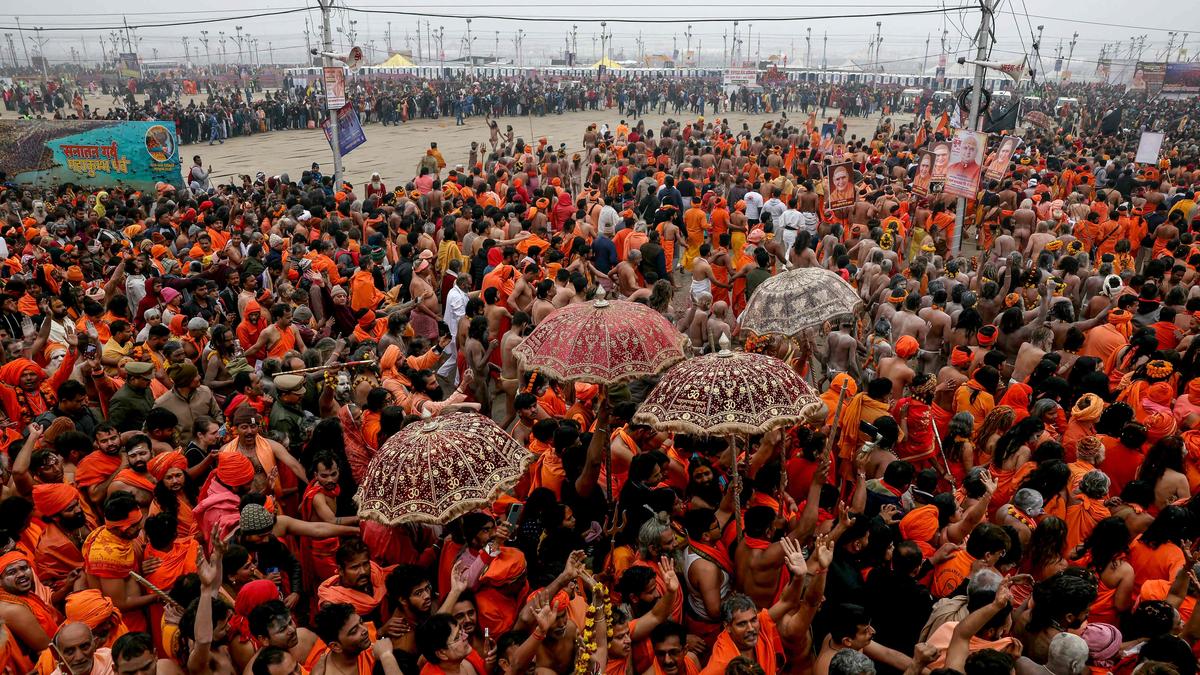
Photo:
AFPI
Devotees arrive to take a dip in Sangam, the confluence of Ganges, Yamuna and mythical Saraswati rivers, for Shahi Snan or ‘royal bath’, during the Maha Kumbh Mela festival, in Prayagraj.
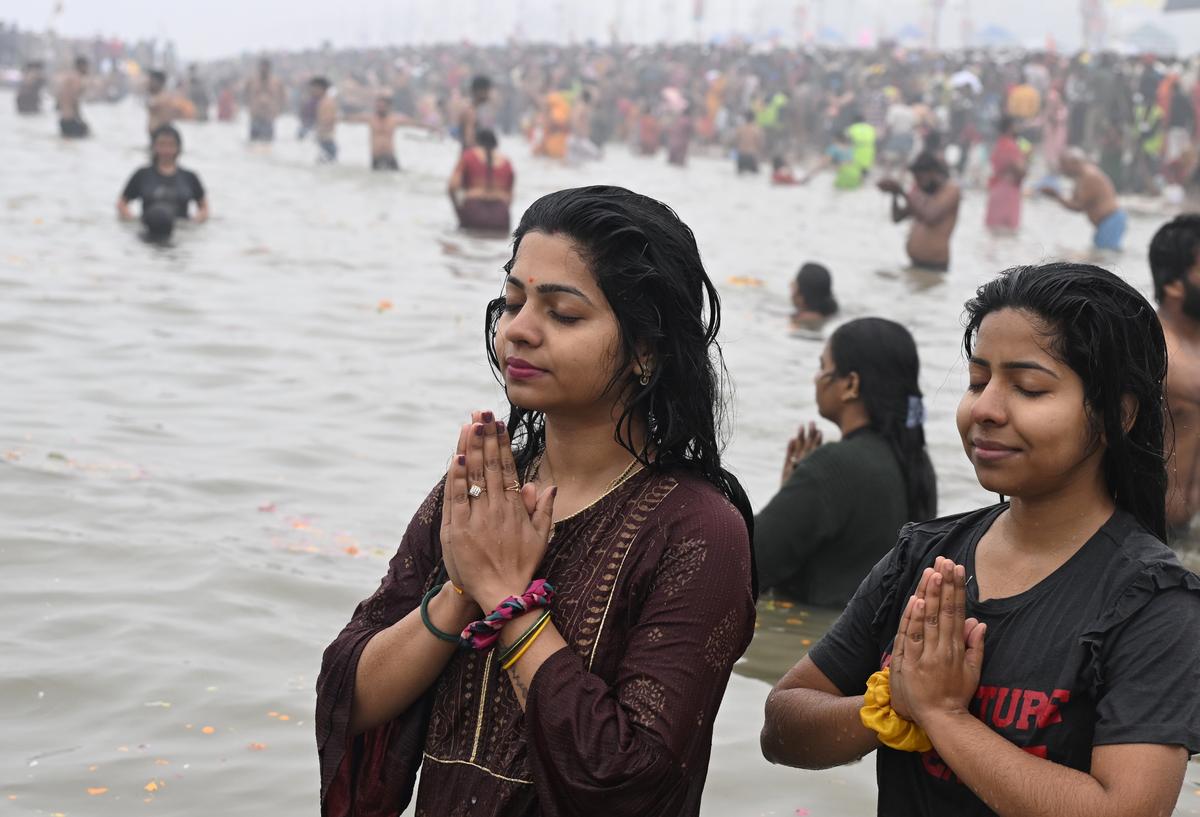
Photo:
SANDEEP SAXENA
With about 40 crore people expected to experience the Mela, Prayagraj is among the most-discussed destinations this time of the year.
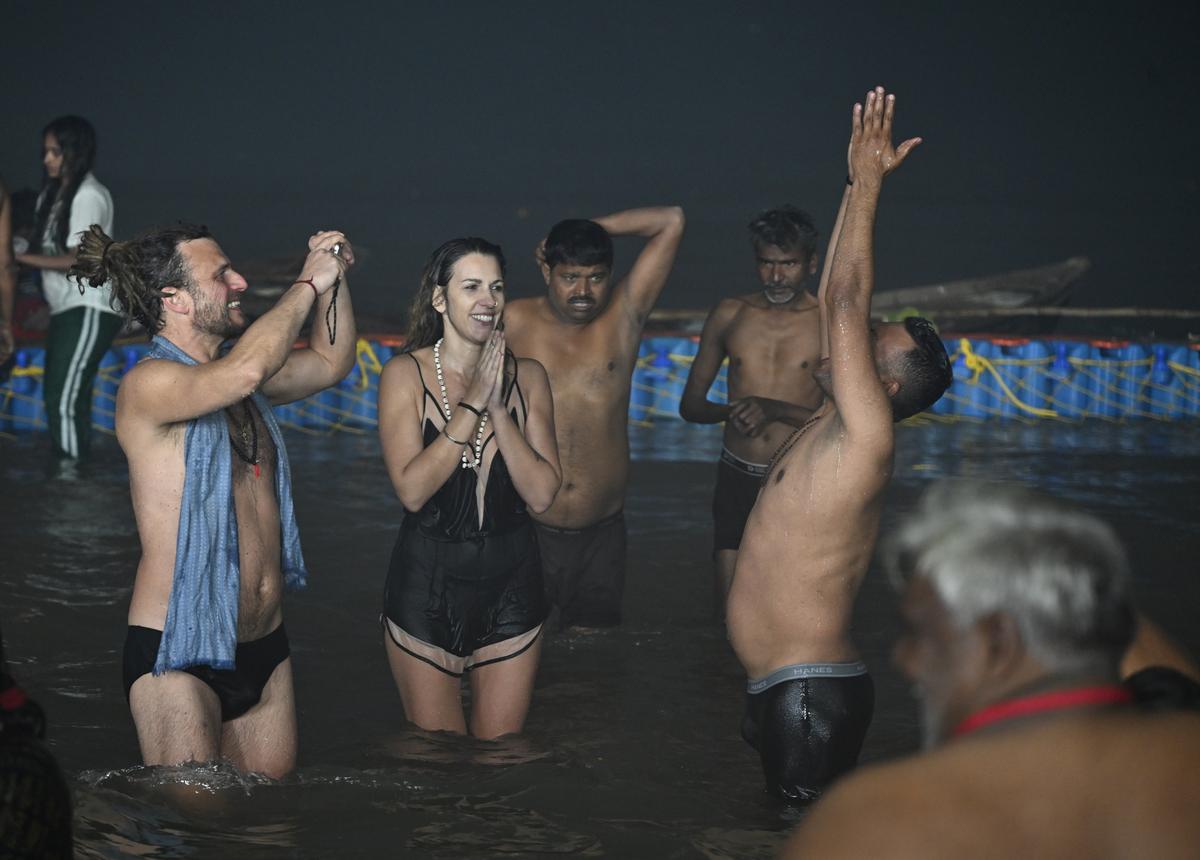
Photo:
SANDEEP SAXENA
With Maha Kumbh Mela now in its full splendour, devotees from India and abroad are immersed in partaking an experience that is unique, unmatched and has a deep and lasting impact.
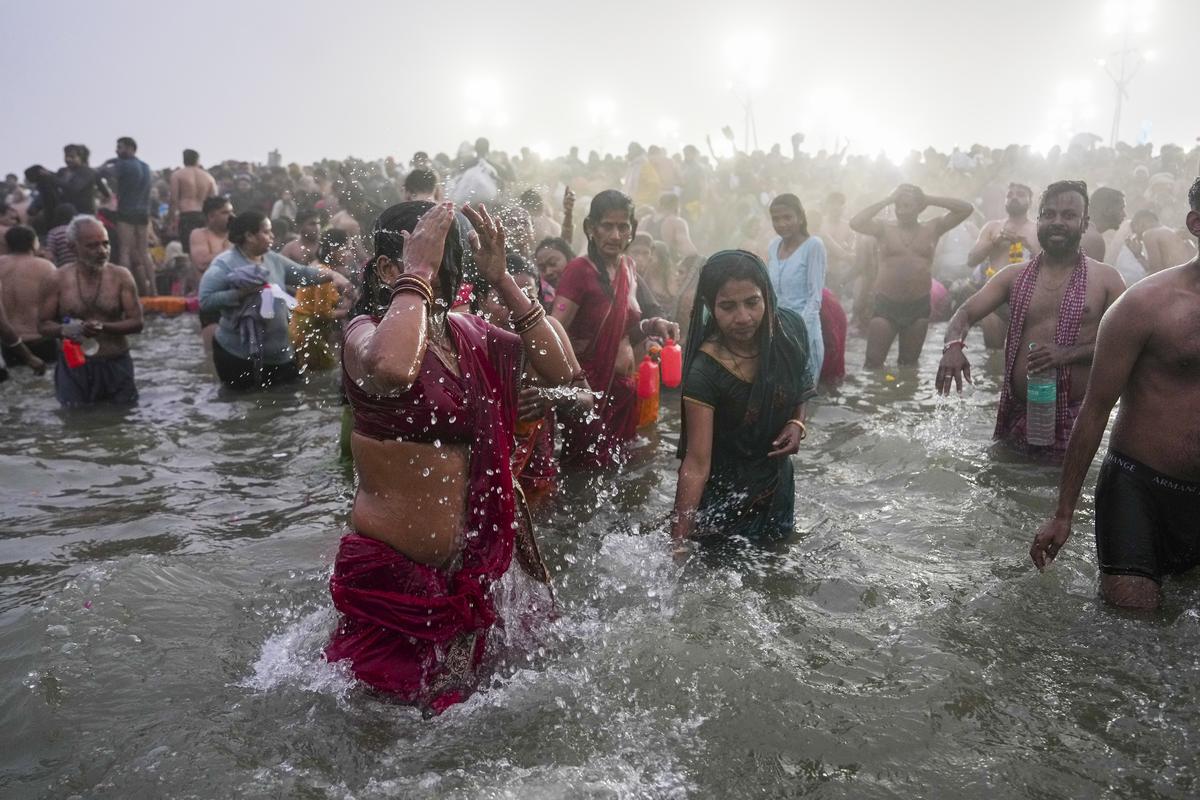
Photo:
PTI
Women devotees take the ‘Amrit Snan’ at the Sangam l, during the Mahakumbh Mela, in Prayagraj.
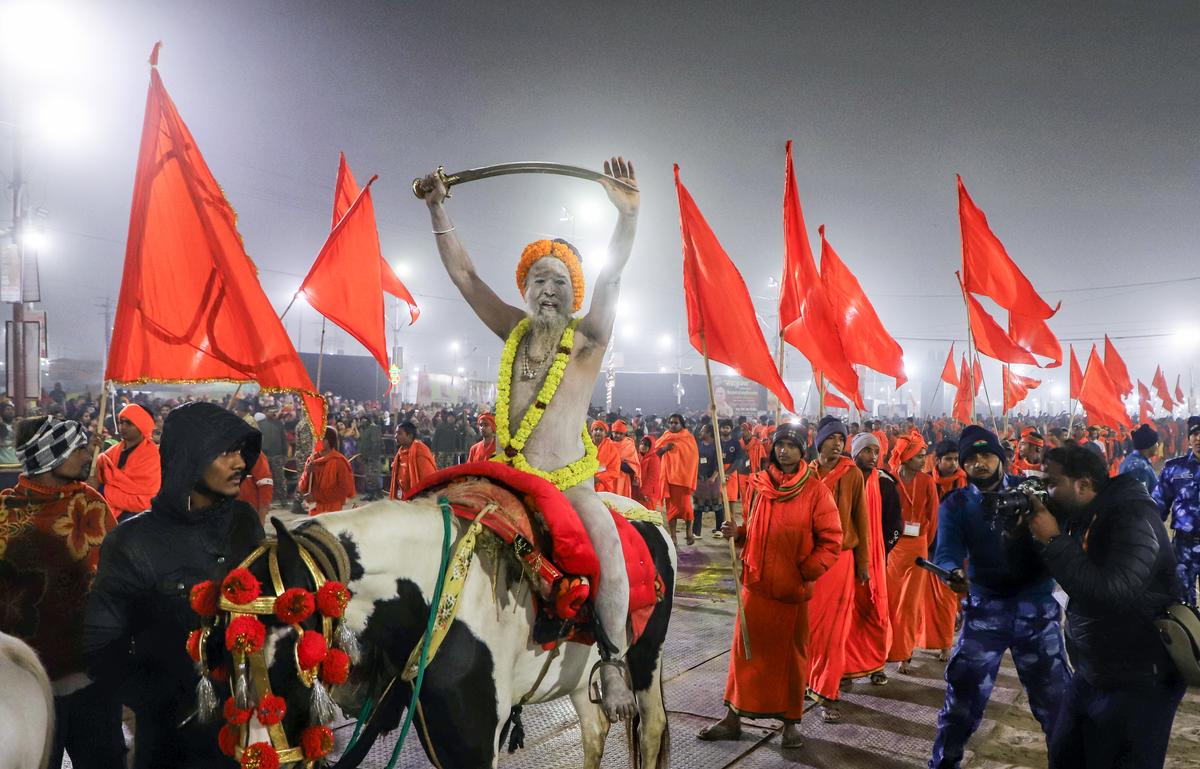
Photo:
ANI
Sadhus during a procession towards Triveni Sangam to take ‘Amrit Snan’.
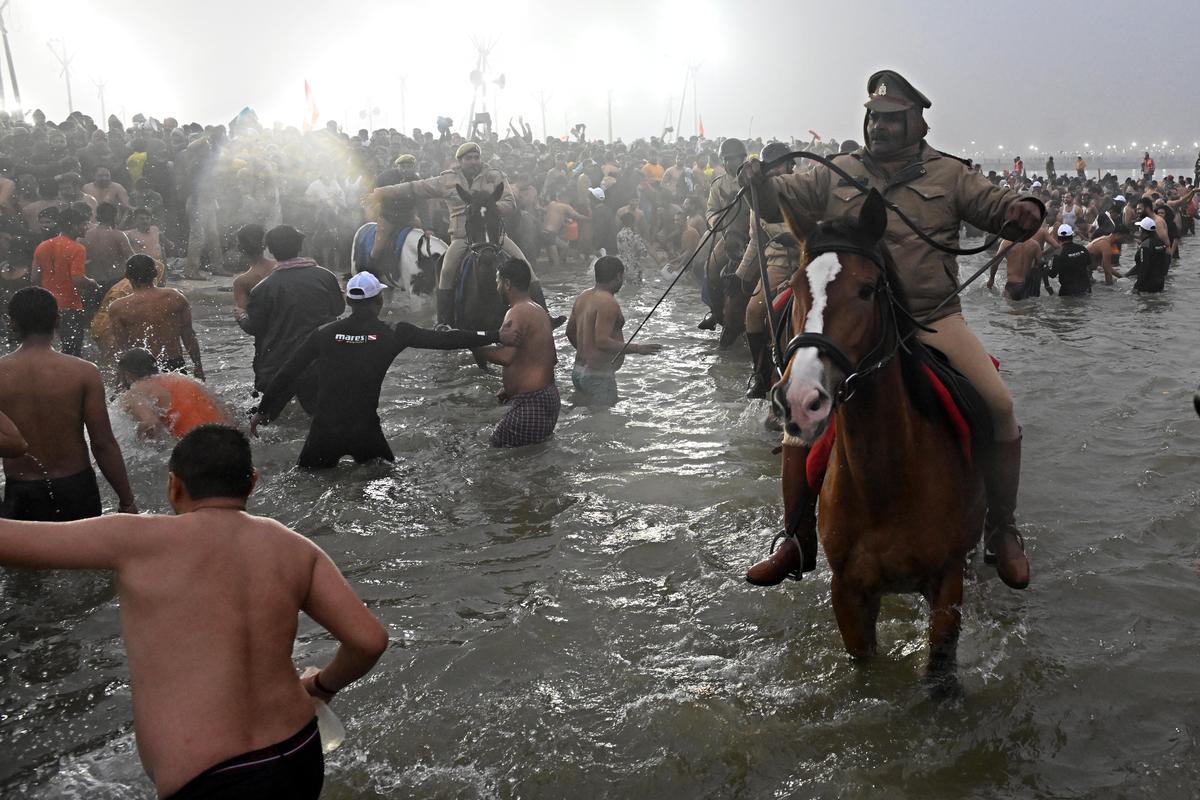
Photo:
SANDEEP SAXENA
Uttar Pradesh’a horse- mounted police controling the crowd during Amrit snan at Triveni Sangam. An Integrated Command and Control Centre monitors every activity across Mahakumbh city, complemented by AI-enabled cameras for enhanced surveillance.
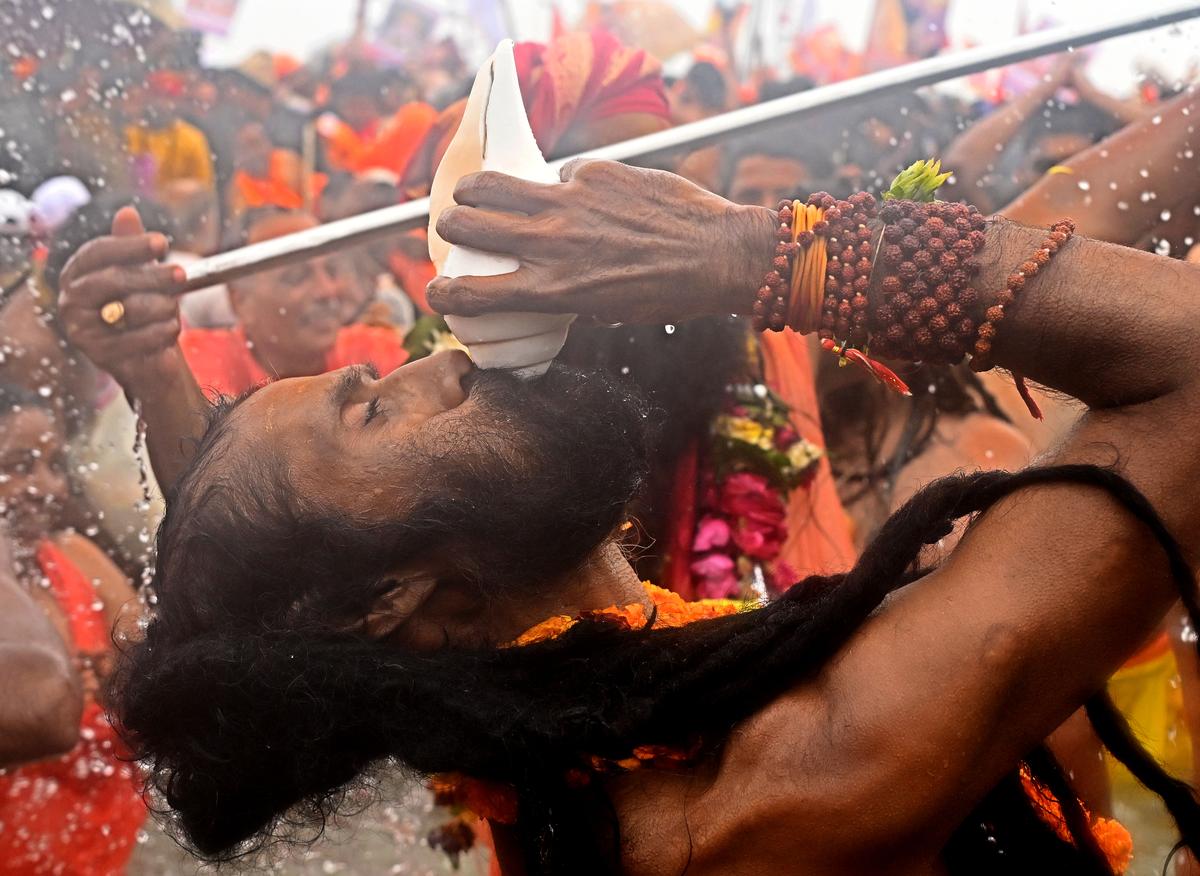
Photo:
SANDEEP SAXENA
According to local guides, Theg Naga sadhus are the ferocious ones. They have even helped fighting against invaders in the past.

Photo:
AP
There are six auspicious bathing days during the Maha Kumbh, which include three major royal baths (Shahi Snan) and three additional bathing days:
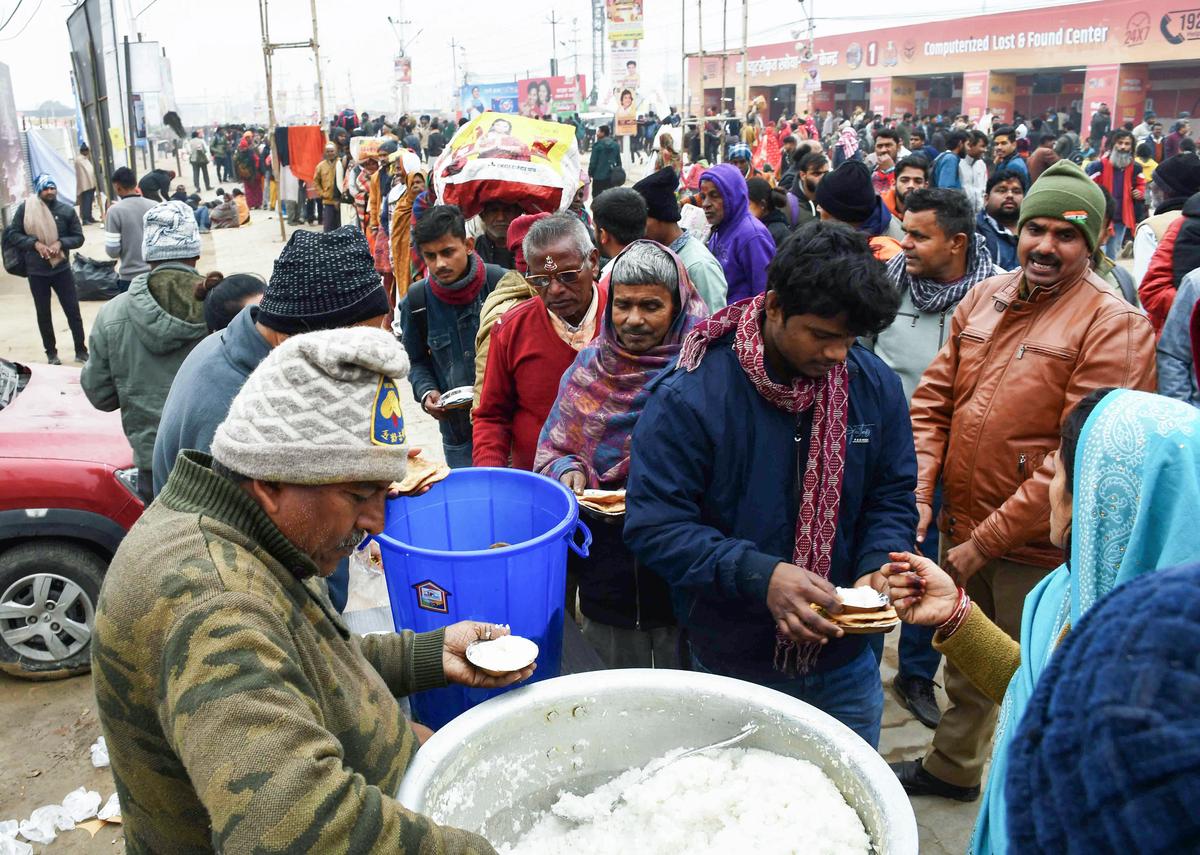
Photo:
ANI
People distribute food during a ‘Bhandara’ in Prayagraj.
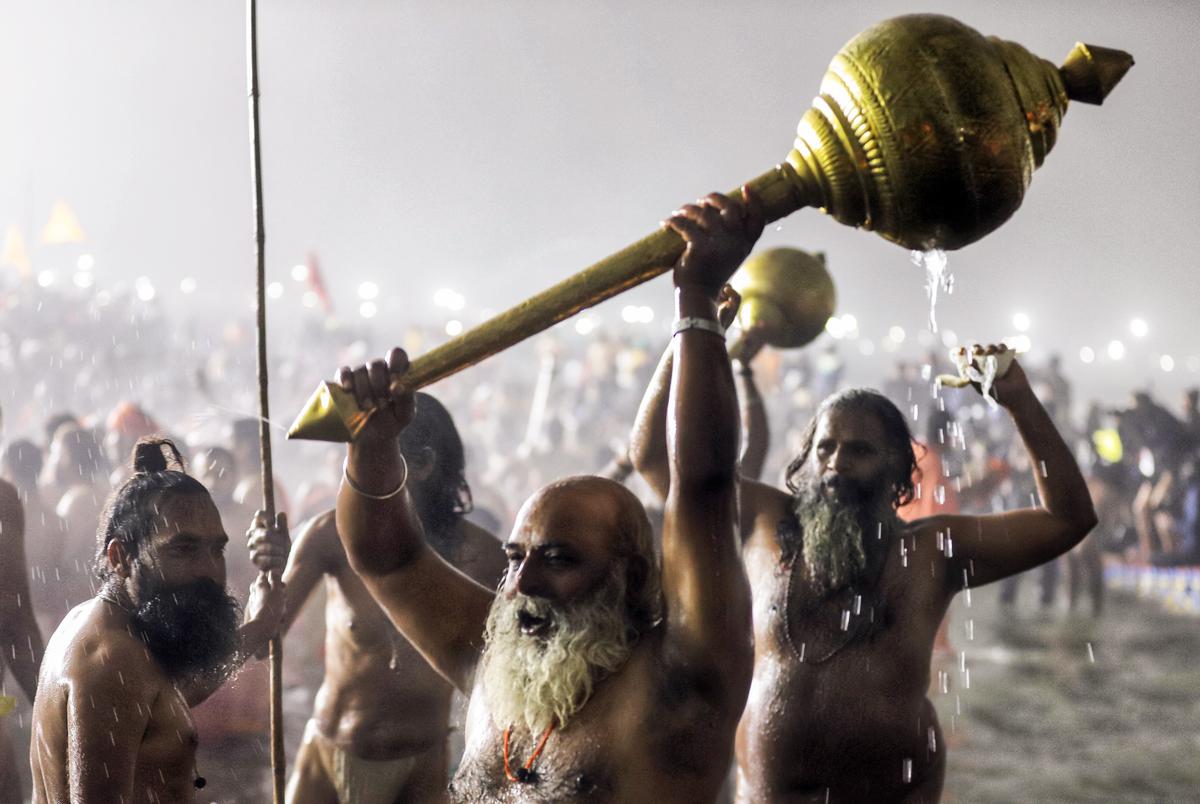
Photo:
ANI
Sadhus from different centres belonging to these Akharas have travelled from places like Varanasi, Haridwar, Rishikesh and Ujjain to participate in the Kumbh Mela.
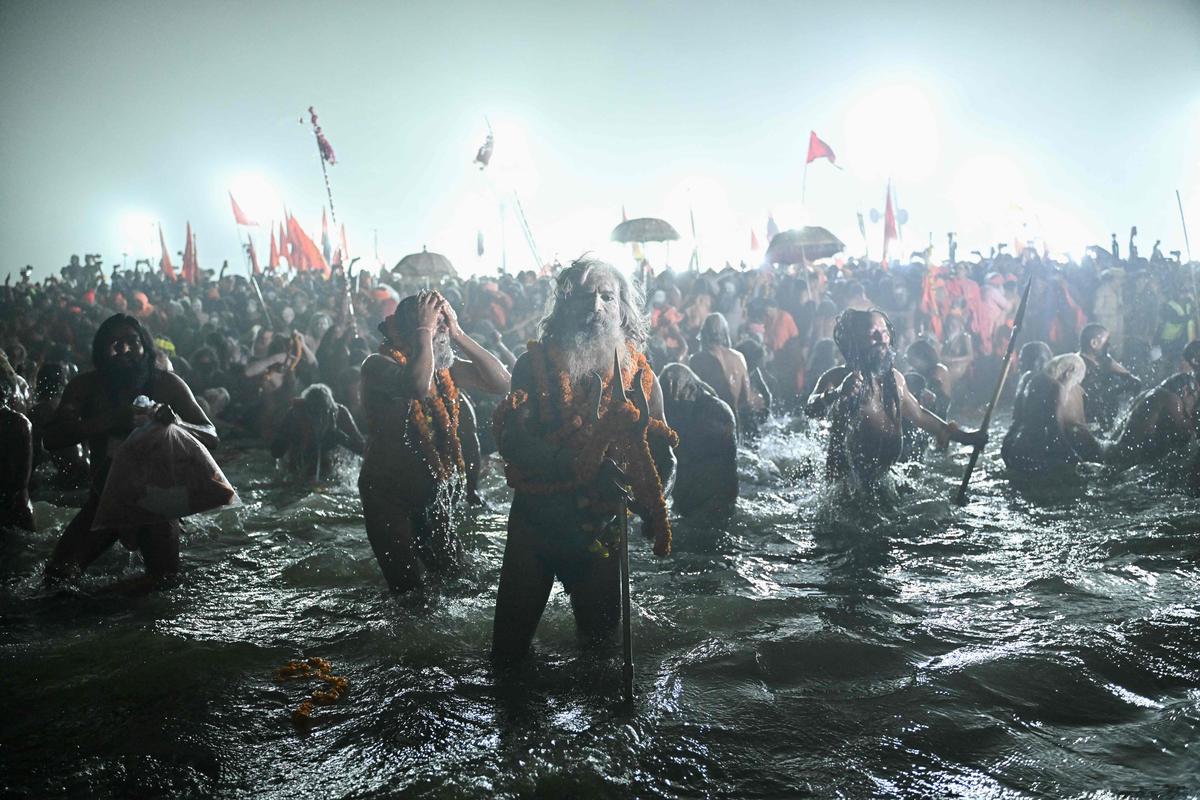
Photo:
AFP
Naga Sadhus – ascetics who smear ashes over their naked bodies and sport weapons like tridents, swords, and lances, as well as conches and drums – the sadhus from various akharas hold traditional processions to the river for bathing.

Photo:
ANI
Foreign devotees take a dip at Triveni Sangam. They are excited as much about the religious fervour as about the friendliness of devotees, food and the local arrangements. The cold weather is adding to the excitement.
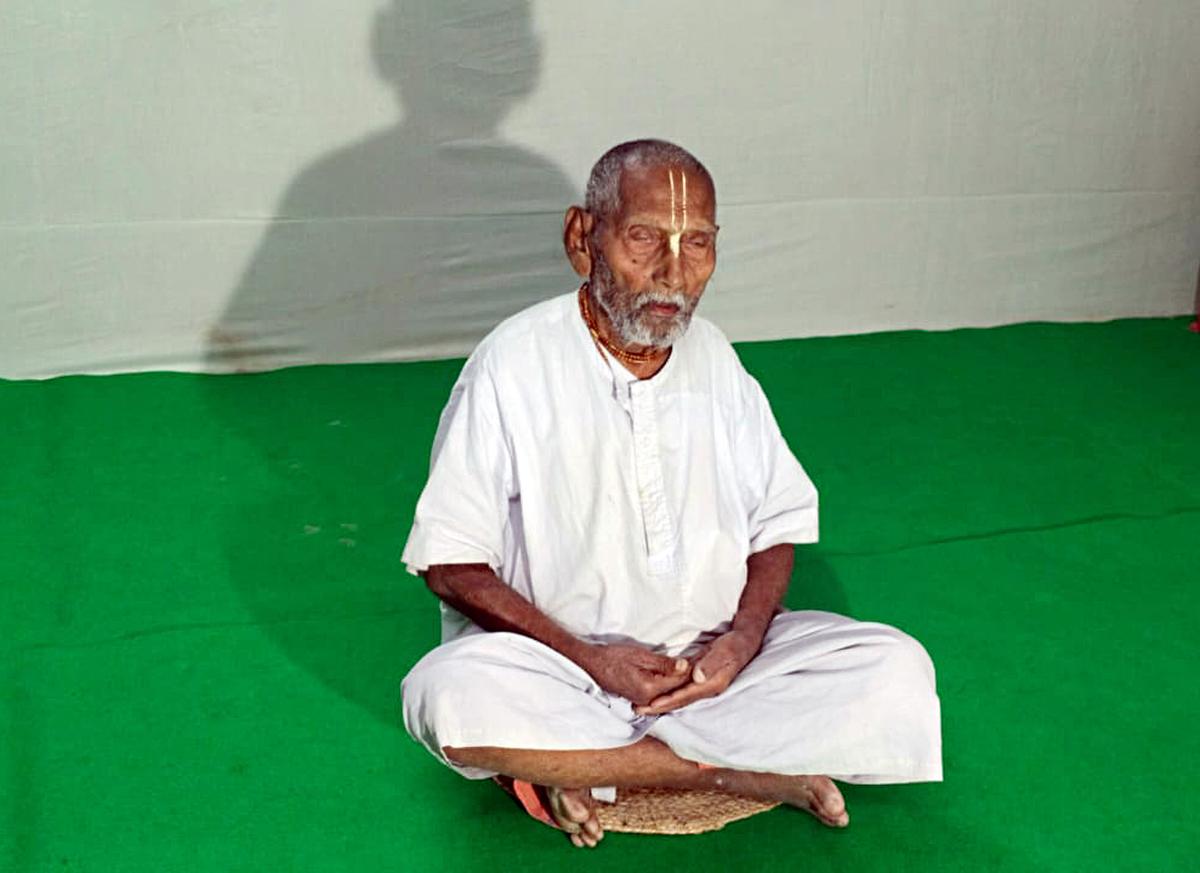
Photo:
ANI
Swami Shivanand Saraswati, a 129-year-old saint at Maha Kumbh, in Prayagraj. Swami Shivanand has been attending the Kumbh Mela for an astonishing 100 years, taking a holy dip at every event.
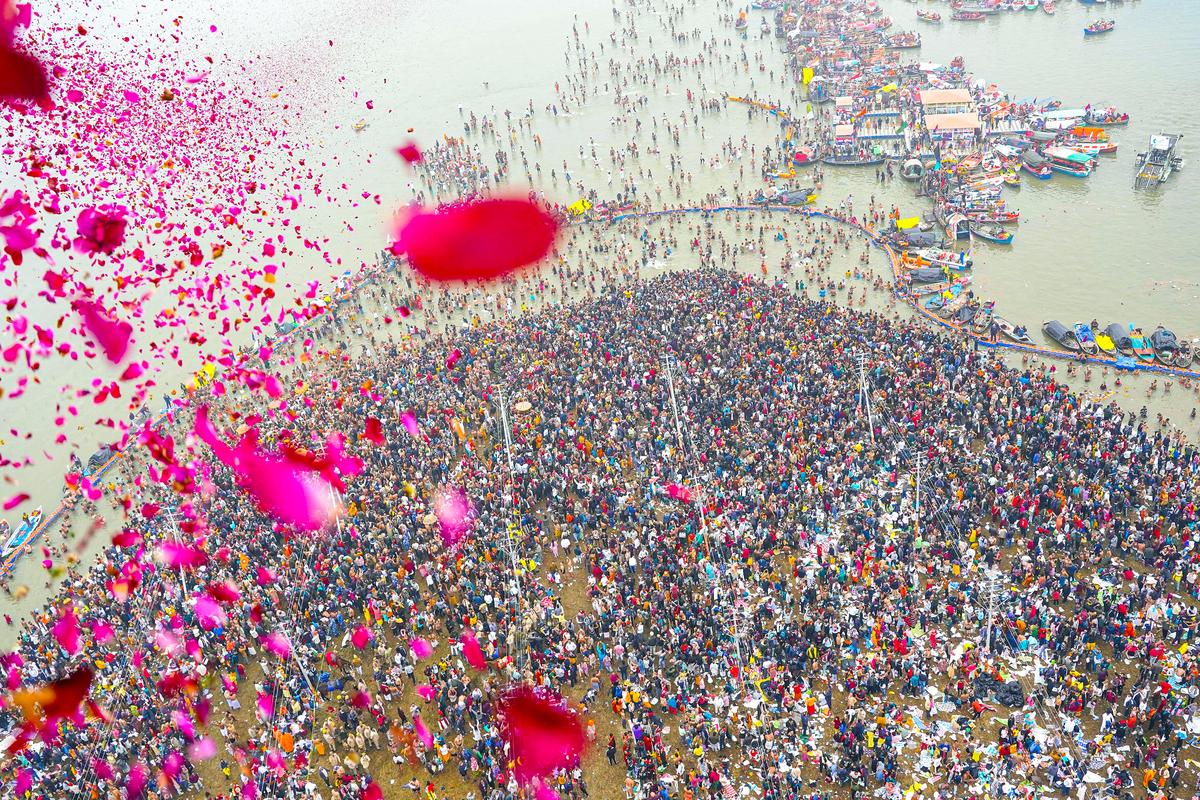
Photo:
ANI
Flower petals being showered on devotees gather to take a dip at Triveni Sangam.
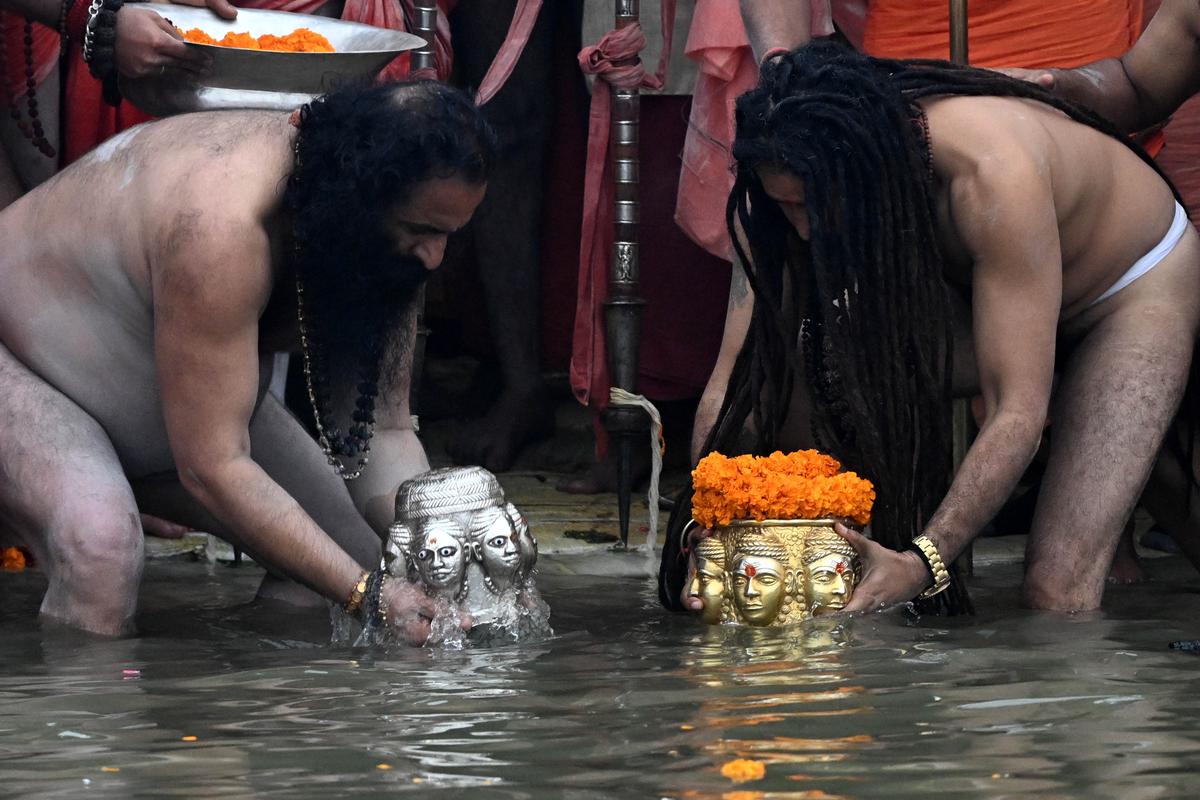
Photo:
SANDEEP SAXENA
Naga sadhus evoke fear, admiration and respect from devotees, who seek their blessings, which also entail slapping the devotees hard on the back.
Published – January 15, 2025 12:13 pm IST
[ad_2]
IThe Hindu