[ad_1]

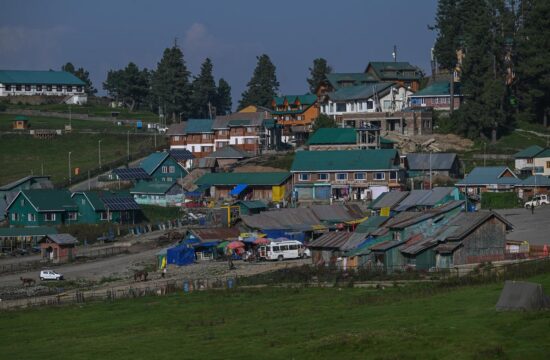
A view of Teesta River in Sikkim. File photo
| Photo Credit: The Hindu
President Droupadi Murmu, Prime Minister Narendra Modi and leaders across the political spectrum on Friday (May 16, 2025) greeted the people of Sikkim on their Statehood day and said the State has set remarkable examples of sustainable development, showcasing harmonious coexistence with nature.
Sikkim became the 22nd State of India on May 16, 1975.

“I extend my best wishes to all residents of Sikkim for a future full of prosperity and well-being,” President Murmu said in a post on X.
“Warm greetings to the people of Sikkim on Statehood Day. Sikkim is widely admired for its boundless natural beauty, rich cultural heritage, and warmth of its people. As one of India’s most environmentally conscious states, Sikkim has set remarkable examples of sustainable development, showcasing harmonious coexistence with nature,” the President said.
Similarly Prime Minister Narendra Modi lauded Sikkim’s strides in diverse sectors.
Congress president Mallikarjun Kharge also wished the people of the State. “A beautiful Himalayan state, enriched with rich natural beauty, Sikkim’s rich cultural heritage, traditions, and diversity are truly captivating and a source of immense pride for its people and the nation,” Mr. Kharge said in a post on X.
Congress general secretary in-charge communications, Jairam Ramesh said the 36th Constitution Amendment Bill was passed by the Lok Sabha on April 23, 1975, and by the Rajya Sabha three days later.
Subsequently after the President’s assent, the 36th Amendment was enacted and on May 16, 1975–exactly fifty years ago–Sikkim became the 22nd state of India with special provisions for it and its people enshrined in Article 371-F of the Constitution, he recalled. “The Republic of India has been enriched enormously by the integration of Sikkim. The state has a number of impressive achievements to its credit,” Mr. Ramesh said.
P.N. Dhar’s book called Indira Gandhi, the ‘Emergency’ and Indian Democracy (2001) is the topmost insider’s account of how the merger happened, he said.
“My own Intertwined Lives: PN Haksar and Indira Gandhi (2018) has two fascinating notes written in the early 1970s by Haksar, who was then the PM’s chief aide, which formed the backdrop to what was finally accomplished in 1975,” Mr. Ramesh said on X.
Published – May 16, 2025 11:32 am IST
[ad_2]
IThe Hindu