[ad_1]
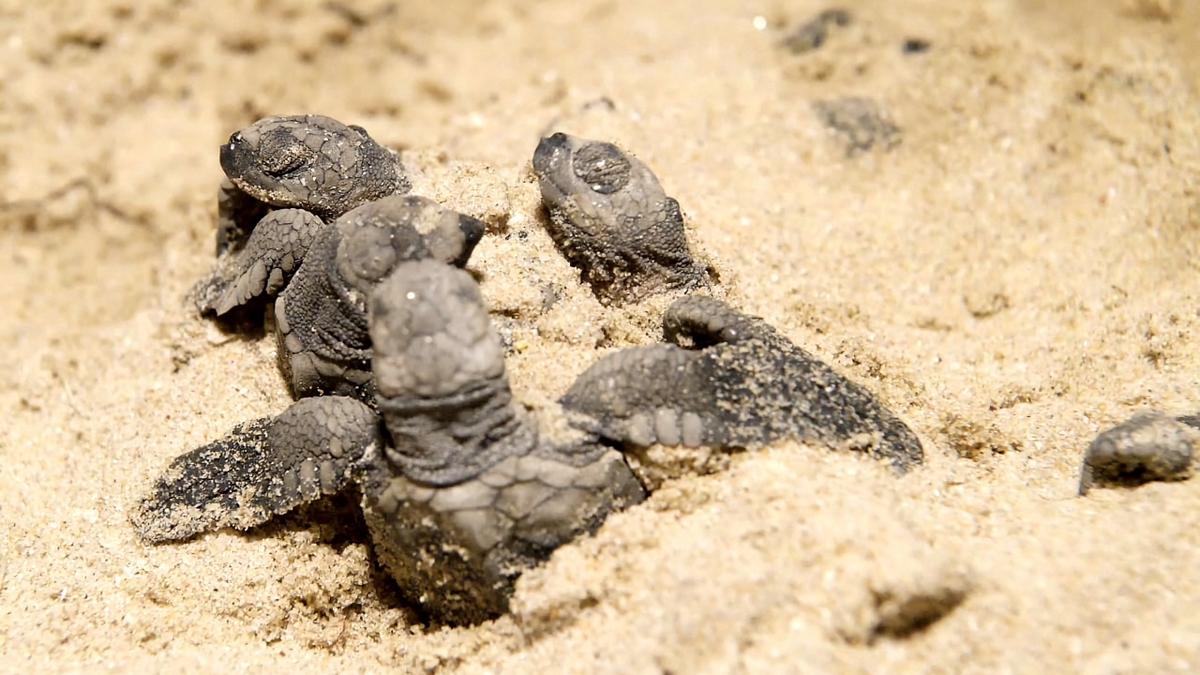
Hatchlings of Olive Ridley turtles on the Thottappally coast (file pic).
| Photo Credit: SPECIAL ARRANGEMENT
Despite challenging conditions, Olive Ridley turtles have made their way to Alappuzha’s coastline during the 2024-25 nesting season, albeit in small numbers.
According to turtle conservationists, four nests containing over 500 eggs have been discovered between Thottappally and Alappuzha. Of these, two were found in Thottappally and one each in Punnapra and Alappuzha. “The official nesting season has just concluded. Of the four nests, eggs from the clutch found at Punnapra have already hatched and 109 hatchlings were released into the sea last week. The remaining three clutches are still in the incubation stage,” says Saji Jayamohan, secretary, Green Roots Nature Conservation Forum.
Last year, conservationists recorded three nests and successfully released 350 hatchlings. In 2022-23, a record 21 nests were found, containing over 2,000 eggs, with more than 1,200 hatchlings making it to the sea.
Though Olive Ridleys continue to nest along the coast, conservationists have raised serious concerns about the deteriorating ecology of the region. They point to mineral sand mining at Thottappally and other human-induced environmental threats as major risks to the turtles’ nesting habitats.
The shoreline from Thottappally to Pallana has long been considered a natural nesting ground for Olive Ridleys, a species protected under Schedule I of the Wildlife Protection Act, 1972.
“A 3-km stretch between Thottappally and Pallana is the main nesting site in Alappuzha district. But this habitat is rapidly vanishing due to mining operations and sea erosion. Except for an 800-metre stretch, the rest of the nesting shoreline has almost disappeared. In the case of the 800-metre stretch, its width is also shrinking,” says Mr. Jayamohan.
There are two mineral sand-mining sites at Thottappally harbour and pozhi, which the government describes as ‘maintenance dredging’ and ‘desilting’, respectively. As in previous years, sand-mining at Thottappally pozhi came to a temporary halt a few months ago following the expiry of the contract. However, the government is expected to renew the agreement for sand extraction ahead of the upcoming monsoon season.
Meanwhile, conservationists are planning to introduce a portable hatchery next season to improve the survival chances of Olive Ridley eggs.
Published – April 06, 2025 07:19 pm IST
[ad_2]
The Hindu