[ad_1]
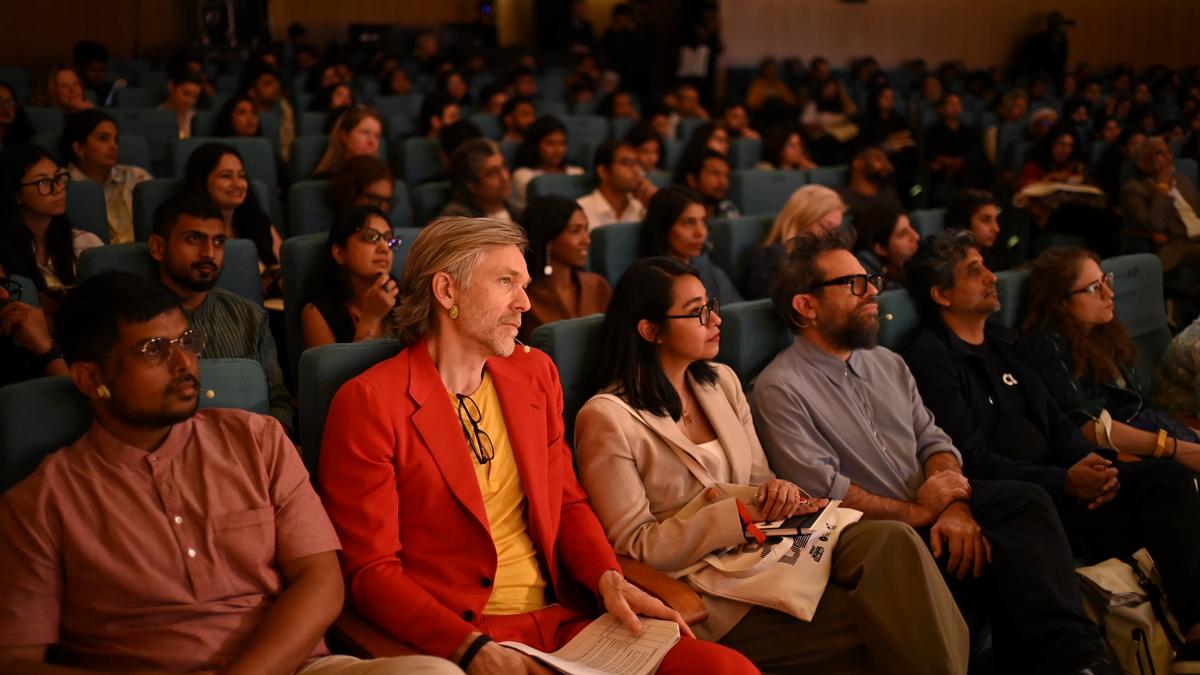
Richard van der Laken, the co-founder and creative head of What Design Can Do, a Netherlands-based foundation that organised the festival.
| Photo Credit: SPECIAL ARRANGEMENT
The Netherlands-based foundation What Design Can Do (WDCD) organised its first festival in New Delhi on Saturday, in collaboration with The Design Village (a part of O.P. Jindal Global University) and Quicksand, to bring about change “using design for positive impact”.
The event, which had panel discussions and workshops, brought together architects, designers, and social sector workers to collaborate and find ways to tackle the “big societal and environmental issues of today”, WDCD co-founder Richard van der Laken said.
The festival was supported by the Embassy of Netherlands. Marisa Gerards, the Dutch ambassador in New Delhi, said, “Design falls between culture and innovation. It’s a tool to find solutions for problems.” Shashank Mani, MP from Deoria, Uttar Pradesh, and Thomas Rau, an architect who works with sustainable design, were some of the speakers at the event.
Mr. Laken added that designers from India and the Netherlands had an opportunity to learn from each other: “The Dutch are adventurous, and our design tends to be straightforward, while Indian designers operate from a space of frugality,” he said, adding that both were focused on simplicity of solutions. India still practises circularity in design and living, key in addressing issues of climate change.
The day-long event saw speakers such as Shashank Mani, MP from Deoria in Uttar Pradesh; Mexico’s Maria Conejo, who illustrates Pussypedia.net that talks about sex education; and Amsterdam-based Thomas Rau, an architect who works with sustainable design. Mr. Mani spoke about his Jagriti Yatra, an 8,000-km train journey through India that links entrepreneurs across the country. He said it was necessary to take into account “historical and social trauma” like that of the independence struggle, while designing community-specific projects.
A part of WDCD is the Challenge that helps design entrepreneurs incubate their ideas and turn them into mass-use products and services. Architect Depanshu Gola, who heads design for Architecture for Dialogue, a research and design firm focused on the built environment, was one of last year’s 11 winners of the incubation programme, for the Breathe Easy project. He and his partner took on indoor air pollution through a chimney-like structure that uses natural air movement, in what they call a “passive ventilation strategy” (air-conditioning is considered an active ventilation technique). They developed their project in Madanpur Khadar in Delhi.
Architect Monish Siripurapu, one of the finalists in 2018, said, “There’s a huge difference between a one-off installation and taking an idea to the market. There are a lot of layers to that process. What Design Can Do helped us with aspects like how to create a financial plan.” His company CoolAnt is on a mission to reduce the number of air conditioners in the world by combining traditional knowledge with modern design, in their use of terracotta structures with water and air flow.
Published – March 09, 2025 01:07 am IST
[ad_2]
The Hindu