[ad_1]
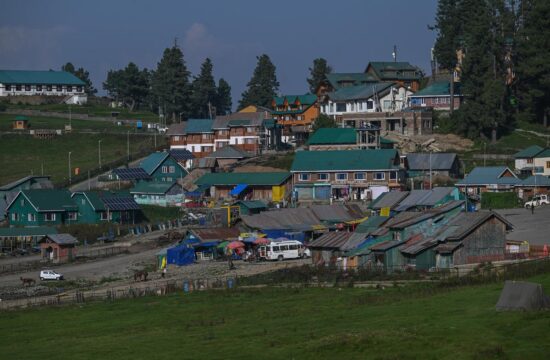
According to MeT data, Kashmir saw a 79% rainfall deficit, with only 29.8 mm of precipitation, from January 1 to February 19.
| Photo Credit: Special Arrangement
Once water-abundant region of Kashmir is grappling with fast depleting waters in rivers, canals and streams this year. Scarce snowfall and rising temperatures are posing a drought threat to the region, which is dependent on water-intensive crops like rice and water-fed apple orchards.
This week, a grim picture of changing weather patterns was reported by netizens across the Kashmir valley. Dozens of videos of dried-up springs and receding streams were posted online by villagers from south Kashmir’s Anantnag, Kulgam, and Pulwama districts. It also included a canal fed by a revered spring at the famous Mughal garden of Achabal in Anantnag.
“I met the J&K Chief Secretary to share the concern over the drying up of the Achabal stream. The crisis has left 16 villages without water and threatens the essence of the iconic Mughal Garden. It’s deeply concerning. It sustains livelihoods, the famed Mughal Garden, and entire communities,” Peer Mansoor, former Minister from south Kashmir, said.
Experts blame the receding water levels to shortening of winter period and rising temperature in Kashmir. Srinagar on Wednesday (February 19, 2025) recorded a maximum temperature of 17.4°C, which is seven degrees above the normal temperature.
“Kashmir saw a sudden rise in temperature from the middle of January this year. The precipitation form had changed, especially during the late autumn and early spring, which usually were observed in the form of snow in the 1980s and mid-90s. Now, we are witnessing it in the form of rain. The winter period is shortened and confined to December and January, which otherwise in the past extend from October to March,” Dr. Mukhtar Ahmad, Director, Meteorological Department (MeT), Srinagar, told The Hindu.
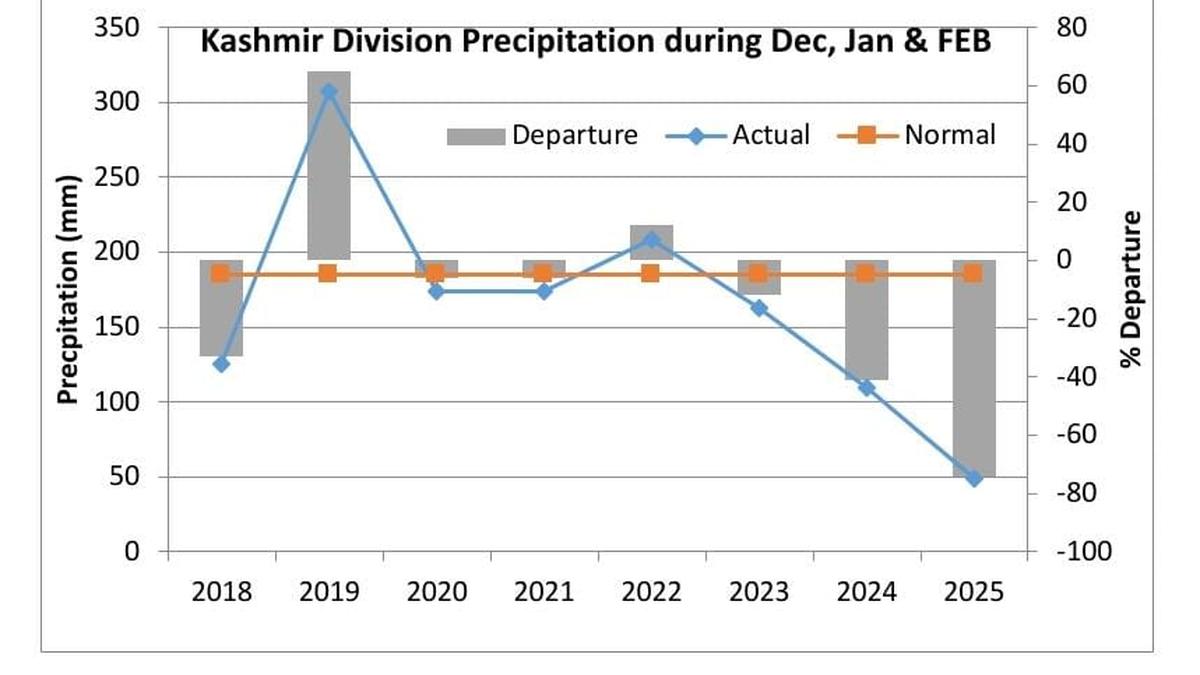
According to MeT data, Kashmir saw a 79% rainfall deficit, with only 29.8mm of precipitation, from January 1 to February 19. This year, the month of February saw precipitation shortfall ranging between 70% and 80% in all districts. It resulted in the Jhelum river recording lowest water levels at multiple points. Officials said the water level at Sangam point was at -0.75ft, 3.73ft at Ram Munshi Bagh and 1.08ft at Asham. The average depth of the Jhelum river is between 2.4ft to 19.9ft in the Valley.
“The earth’s average temperature has increased by almost 1.5°C in the past five decades. The Himalayan range is the first indicator, as it witnesses rapid melting of glaciers, changes in precipitation patterns and shifting agriculture in higher altitudes,” Mr. Mukhtar said.
With the Himalayan range set to see an increase in temperature up to 6°C in coming decades, Mr. Muhtar said, “Such a rise may have devastating impacts on glaciers, river water, local nallahs, drinking water availability, water for agriculture, horticulture etc.”
Sartaj Ahmad Shah, Joint Director, Department of Agriculture, in an advisory, asked farmers in Kashmir “grow crops that require less water and focus more on millets, corn, and pulses than water-intensive paddy.” The Department has approached the Sher-e-Kashmir University of Agricultural Sciences and Technology, Kashmir, “to guide about favourable crop patterns in areas facing shortage of water”.
Water availability in Kashmir is already facing a challenge, with many areas downriver, especially Baramulla, complaining of water shortage.
Braham Jyoti Sharma, Chief Engineer, Jal Shakti Department, said the department was mulling a contingency plan and diversion of channels to mitigate the water shortage. “Tanker services could be deployed to far-flung areas if required,” he added.
J&K Chief Minister Omar Abdullah on Wednesday (February 19, 2025) came up with a rare call of cooperation from locals. “All of us residents of J&K will have to change the way we take water for granted. I’ll be reviewing the measures the Jal Shakti (PHE) Dept intends to take to deal with the developing crisis and I’ll also be talking to the people of J&K over the next few months about what we can do collectively,” Mr. Abdullah said.
He warned that J&K was “staring at a water crisis this year”. “It’s not a recent phenomenon, actually it’s been building up for a few years now. While the government will have to adopt a more proactive approach for water management & conservation, it can’t just be a government centric approach,” he added.
Meanwhile, the MeT predicted a wet spell for J&K from the evening of February 19 to February 20.
Published – February 19, 2025 09:01 pm IST
[ad_2]
IThe Hindu