[ad_1]
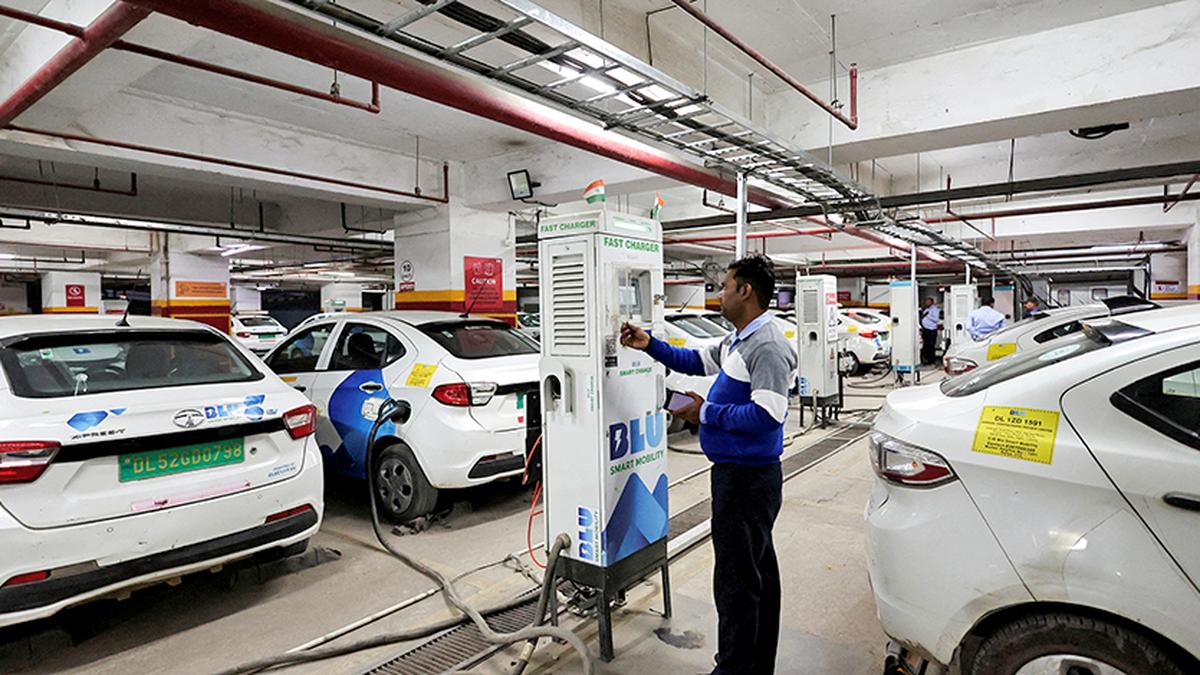
Image used for representative purpose only.
| Photo Credit: Reuters
The Supreme Court on Monday (January 27, 2025) directed the Centre and National Capital Region (NCR) States to consider whether a “substantial” number of vehicles used by the governments, their principal bodies and other government organisations can be converted to electric vehicles.
A Bench of Justices A.S. Oka and Ujjal Bhuyan directed the Union government and NCR States to take a decision and report by March 17, 2025.
Delhi’s mounting waste crisis | Explained
Segregation at source
The top court also ordered the Delhi government and the Municipal Corporation of Delhi (MCD) to form teams to ascertain compliance with Rule 4 of the Solid Waste Management Rules, 2016.
Rule 4 mandates waste generators, including resident welfare and market associations, gated communities and institutions with over 5,000 sq. m area, to segregate waste at source, facilitate collection of the segregated waste in separate streams and process biodegradable waste through composting or bio-methanation within the premises as far as possible. The recyclable material must be given to authorised waste pickers or recyclers.
The court directed the Delhi government and MCD to file compliance reports by March 17. Penal action must be taken against any entities who violate Rule 4.
The court said both Delhi government and the MCD had failed to comply with the 2016 Rules as the capital sees the generation of about 3,000 tonne of solid waste everyday.
“Unless no real solution is found, we would have to rely on drastic orders, like stopping certain categories of construction, to control the situation,” the Bench remarked orally.
The court ordered the Delhi government and local authorities in the National Capital to comply with the mandate given in Rule 15 of the 2016 Rules and file a compliance report on March 17.
The Rule specifically makes it the responsibility of the local authority concerned to “arrange” for door-to-door collection of segregated solid waste from households, including slums and informal settlements, commercial, institutional, other non-residential premises, etc.
Also Read | Solid waste management in Delhi in a ‘sorry state’: Supreme Court
Rule 15 provided for the establishment of a system to recognise organisations of waste pickers or informal waste collectors, and promote and establish a system for their integration to facilitate their participation in solid waste management, including door-to-door collection of waste. The Rule also mandated the formation of self-help groups, identity cards, etc, to encourage the integration process.
The Bench asked the Delhi government to consider the best practices followed in solid waste management across the country.
Published – January 27, 2025 11:55 pm IST
[ad_2]
The Hindu